


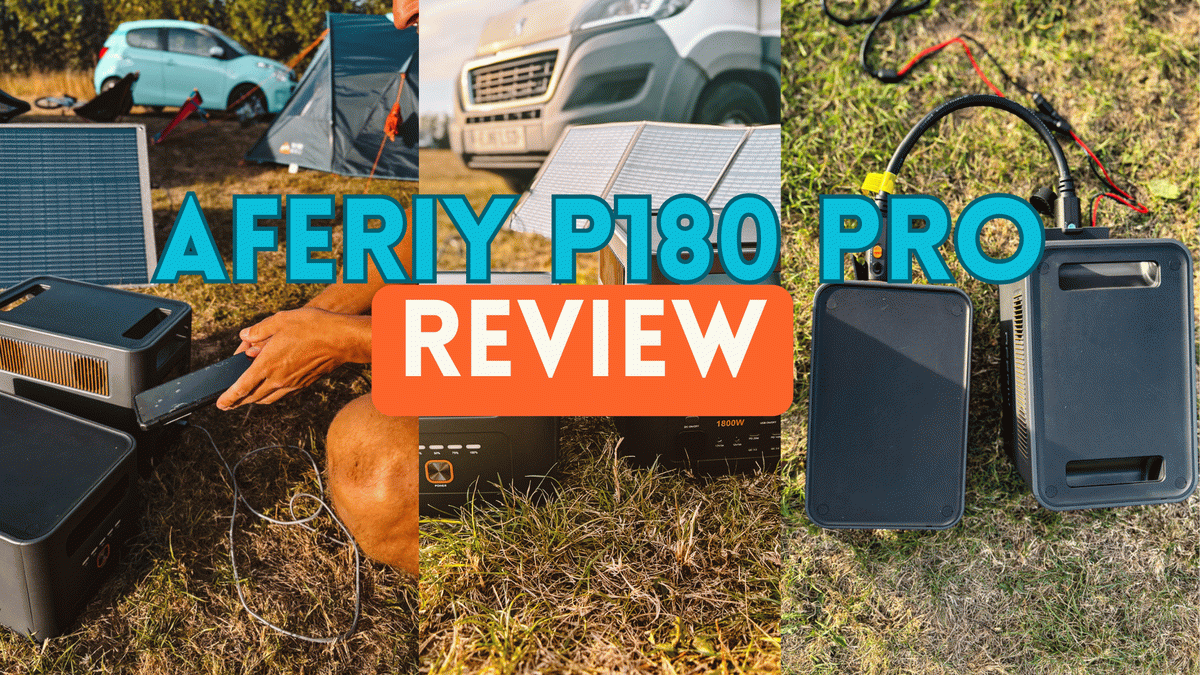
We've tested a lot of portable power stations over the last few years.
We first started using them for campervan trips, but since then we've had them powering everything from laptops and phones to kitchen appliances, camping setups and even acting as temporary power while working on our boat's electrical system.
So at this point, I think we've got a pretty good idea of what makes a power station genuinely useful, rather than simply looking good on a spec sheet.
For this review, I've been testing the AFERIY P180 Pro alongside the P180-B expansion battery and AFERIY's S200A1 200W folding solar panel.
And honestly, I think the P180 Pro sits in a really nice sweet spot.
It's small enough that I wouldn't think twice about throwing it in the campervan, but its 1,800W inverter means it can power significantly more than the little units designed mainly for phones, cameras and laptops.
Then, if 1,024Wh isn't enough battery for a particular trip, you can simply plug in an expansion battery and double it.
But let's not get too ahead of ourselves. We're going to dive further into the exact features of the P180 (+ more) below.
Let's get into it. ...
My overall rating: 8.5/10.
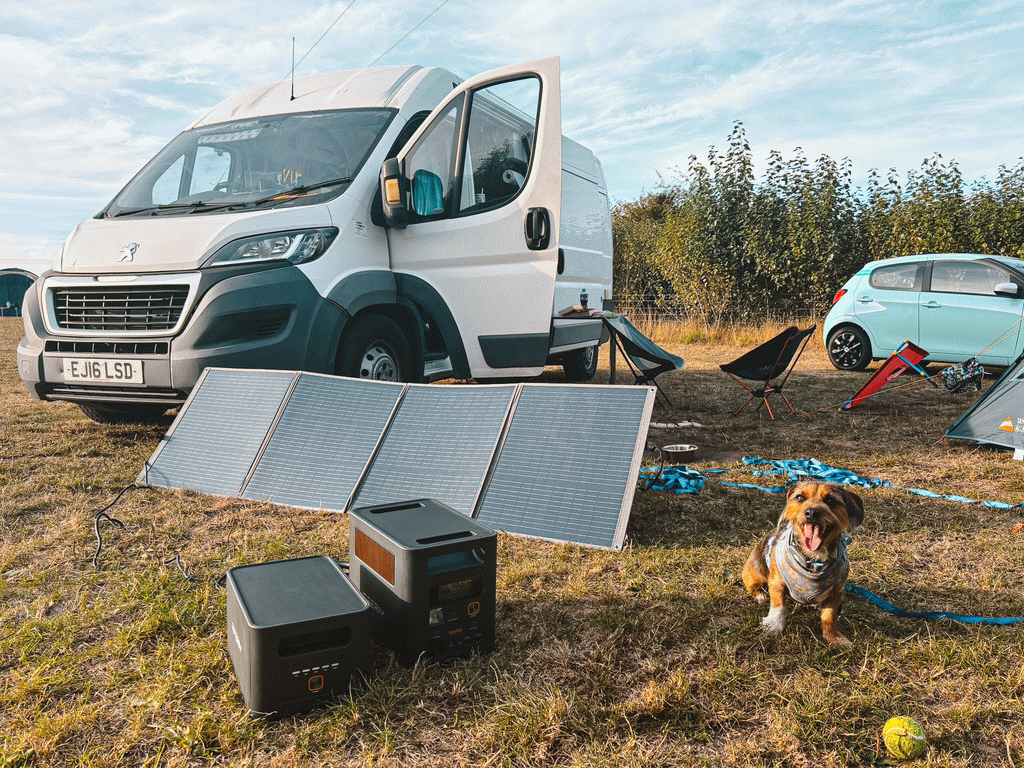
I think the P180 Pro is best suited to camping, campervans and relatively simple off-grid setups where you want a decent amount of usable AC power without lugging around one of the enormous 2-4kWh power stations.
The base unit gives you 1,024Wh of LiFePO4 battery capacity and a 1,800W pure sine wave inverter, while additional P180-B batteries can take total capacity all the way up to 5,120Wh. The unit itself weighs 11.64kg and measures 35 x 22 x 26.3cm.
If you're new to power stations, the distinction between watts (W) and watt-hours (Wh) is important. Watts tell you how much power the station can supply at a given moment, whereas watt-hours tell you how much energy is stored in the battery.
What I particularly like is that you aren't forced into buying a physically much larger power station just because you occasionally want more battery capacity.
If 1,800W is enough output for everything you intend on powering, you can start with the P180 Pro and add more battery capacity later.
That's a very different proposition to simply buying the biggest power station you can afford and then finding it's overkill.
First impressions are very good.
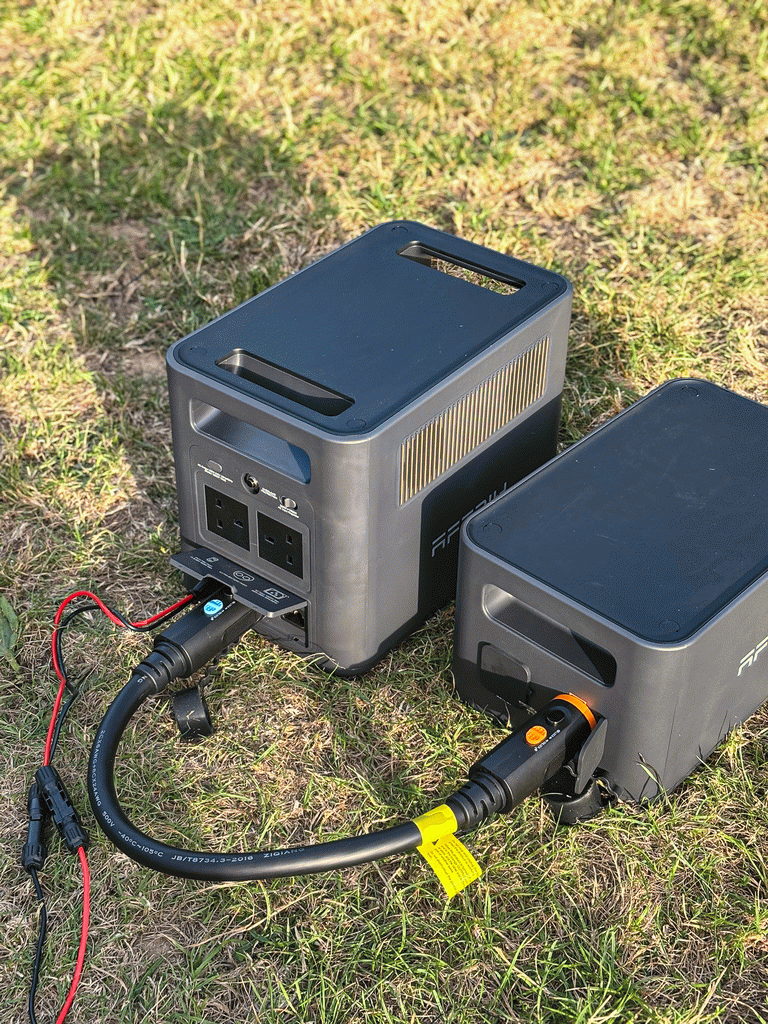
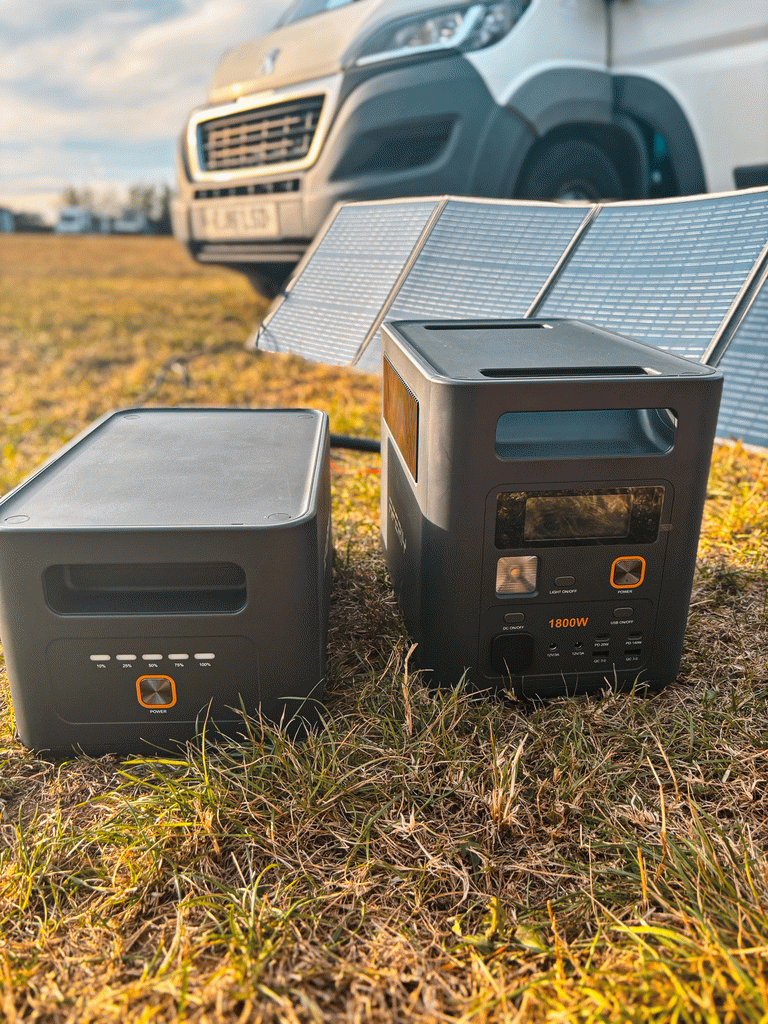
Both the P180 Pro and P180-B feel extremely solid, and I think they're two of the better-looking portable power stations I've tested.
They're quite square and compact rather than big, rounded boxes, with subtle orange detailing and surprisingly nice-looking fan grilles along the sides.
It's a small thing, but the whole design feels modern without trying too hard.
At 11.64kg, the P180 Pro is also at a weight where I don't think wheels or a telescopic handle are necessary. Both this and the expansion battery are easy enough to pick up and move around.
I also like the port layout.
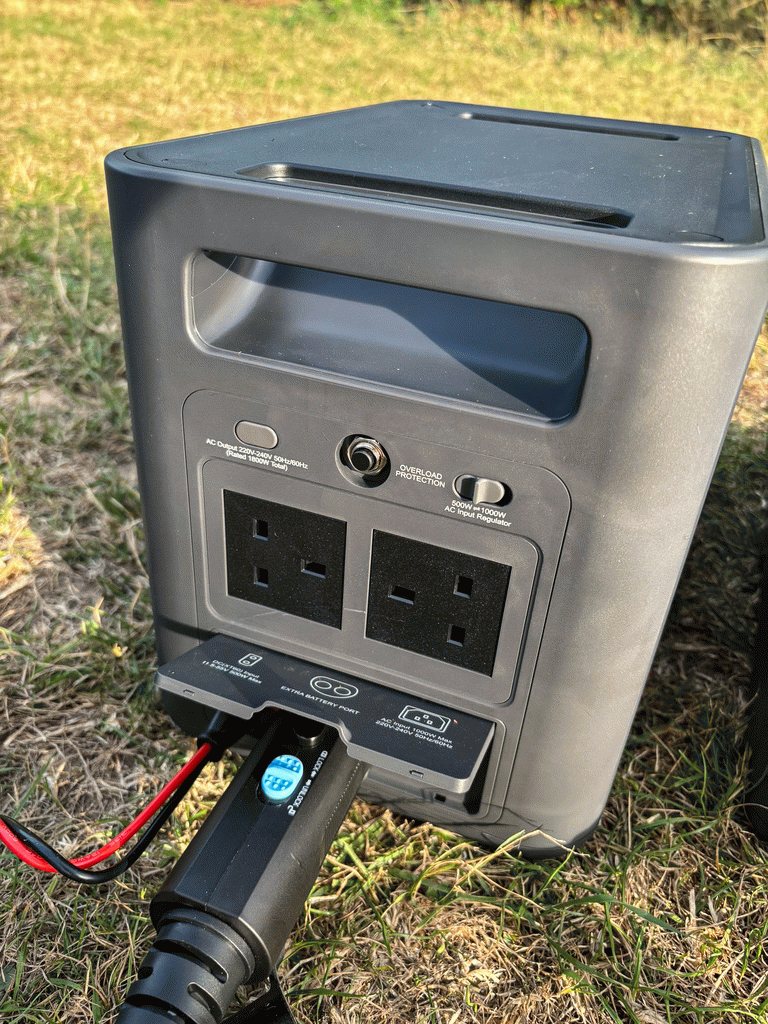
The front houses the display, USB and DC connections, while the two UK 240V sockets are positioned on the rear.
You could argue that having sockets on two sides makes access slightly more awkward, but I actually quite like it.
It keeps the front uncluttered and means the station could tuck neatly underneath a desk or into a campervan setup without cables sticking out everywhere.
There's a sensible selection of outputs too: two AC sockets, two USB-A ports, two USB-C ports including a 140W USB-C output, a 12V car socket and two DC5521 outputs.
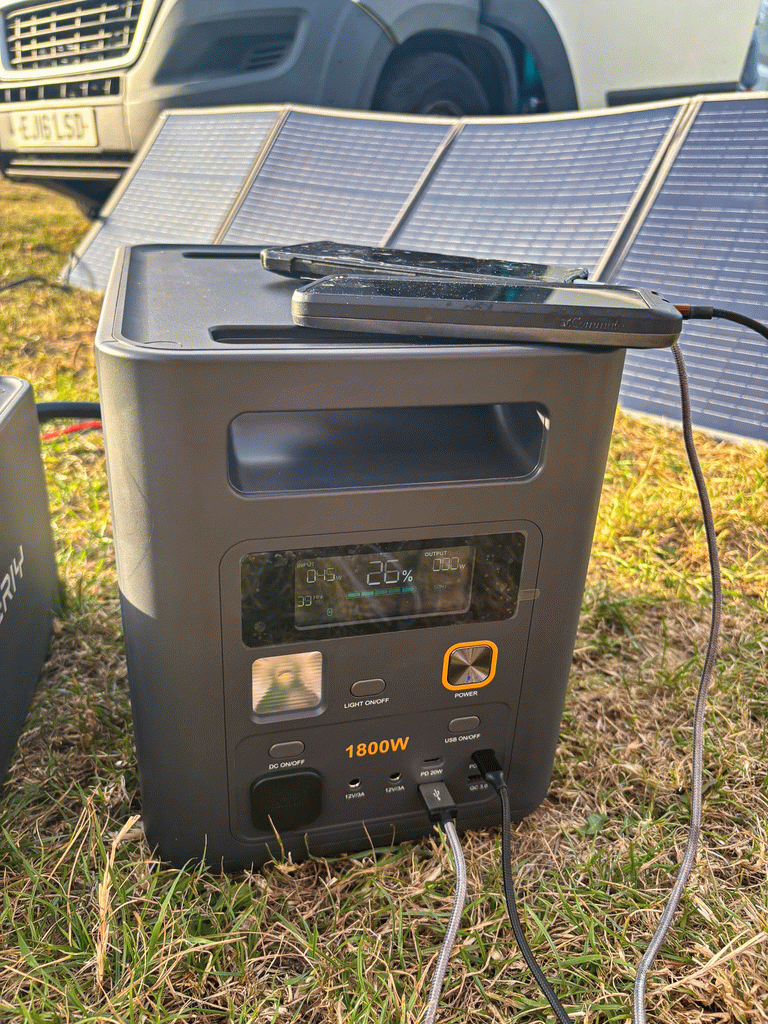
The screen itself isn't anything revolutionary, but it's clear, simple and easy to read.
One feature I really liked was how quickly the remaining-time estimate reacted to whatever I was doing.
For example, when solar power was coming in while power was simultaneously going out, the remaining charge time adjusted accordingly. Initially it displayed around two hours, before changing to a more precise figure of 82 minutes as the remaining charge time decreased.
There's app support as well, allowing you to monitor things such as battery level, power input/output and control ports remotely.
A lot of the time these power station apps can feel gimmicky and unpractical or worthwhile. Not so much with AFERIY where you can control things ranging from speed of charge to turning the light on and off.
Noise is another big positive.
Under smaller loads the station is essentially silent.
The fans did start running after a while when charging and when I pushed it hard with larger appliances, but even sitting next to it while working, my laptop was louder.
I'd have absolutely no issue sleeping with this running inside our campervan.
My least favourite physical feature is probably the light.
It's tiny.
AFERIY's larger P210 that I've previously reviewed has a much more substantial light running along the side, which I found genuinely useful. The little light on the P180 Pro feels more like something that's there because power stations are expected to have one.
It would help you find something in the dark, but I wouldn't rely on it for lighting up a camping area.
This is where things got more interesting.
There's a huge difference between a small power station capable of charging a phone and something with an inverter large enough to run proper household appliances.
The P180 Pro's continuous AC output is rated at 1,800W.
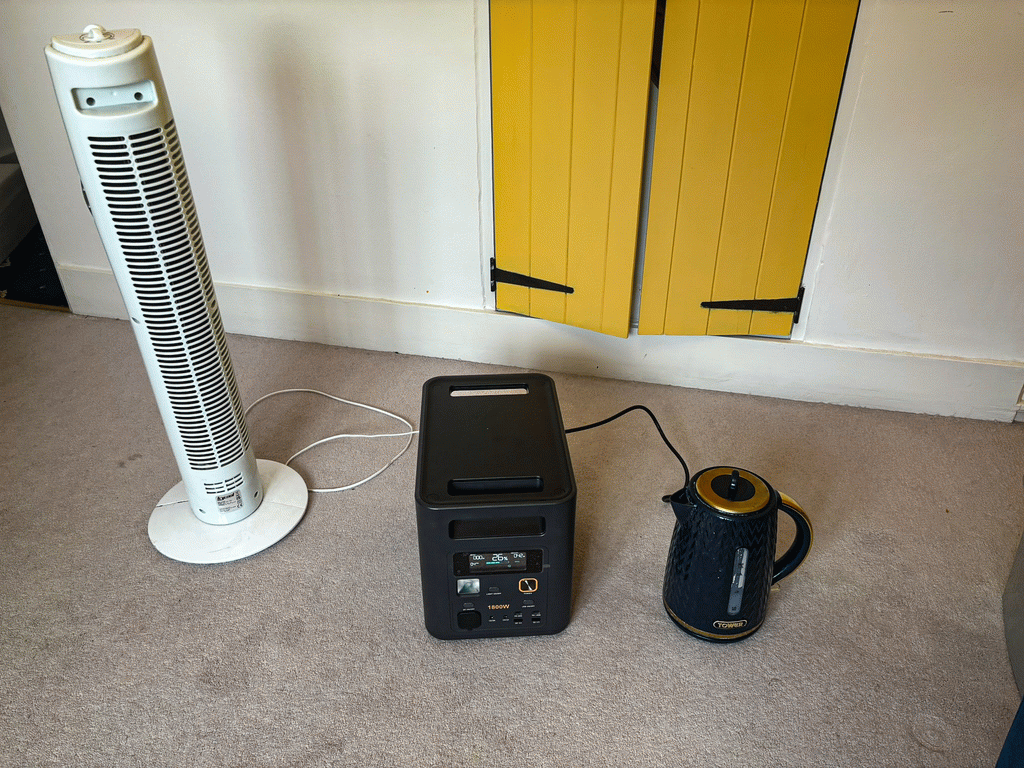
I tried everything from charging three phones simultaneously through to plugging in fans and kitchen appliances.
And then I tried our kettle.
In one test, I had the kettle and a fan running and the P180 Pro display was sitting at around 1,804W.
It managed the full roughly two-minute boil without tripping.
The fan did seem to drop slightly in output at points, so I wouldn't read that test as evidence that you can simply keep piling appliances onto the station around its stated limit.
But I was impressed by how comfortably the P180 itself seemed to deal with it.
There wasn't suddenly a huge amount of fan noise, nor did the station feel like it was getting excessively hot. The two-minute test used roughly 5% of the battery.
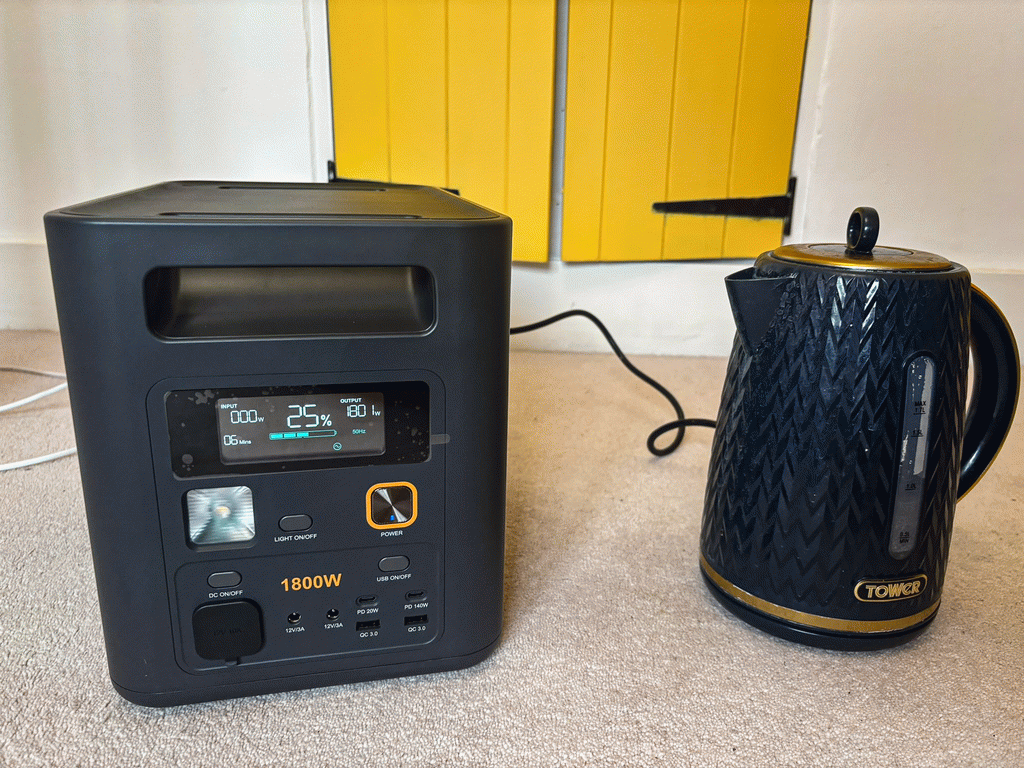
I then did a cleaner test with the kettle by itself.
This time the power draw immediately surged to roughly 2,650W.
The station continued supplying it for around 19 seconds before the overload protection kicked in, the AC output stopped and the unit beeped to tell me something was wrong.
That's exactly what I wanted it to do.
The P180 Pro isn't rated to continuously supply a 2,650W kettle, so this wasn't a failure. I was deliberately asking it for substantially more power than its 1,800W rating.
Importantly, after tripping there was no drama. It wasn't roasting hot or desperately running its fans. The AC output simply shut down safely.
So if you're buying this for camping and want to run a kettle, check your kettle's actual wattage.
There are lower-powered camping kettles that fall comfortably within this sort of inverter range, whereas many normal household rapid-boil kettles can be 2,500W+.
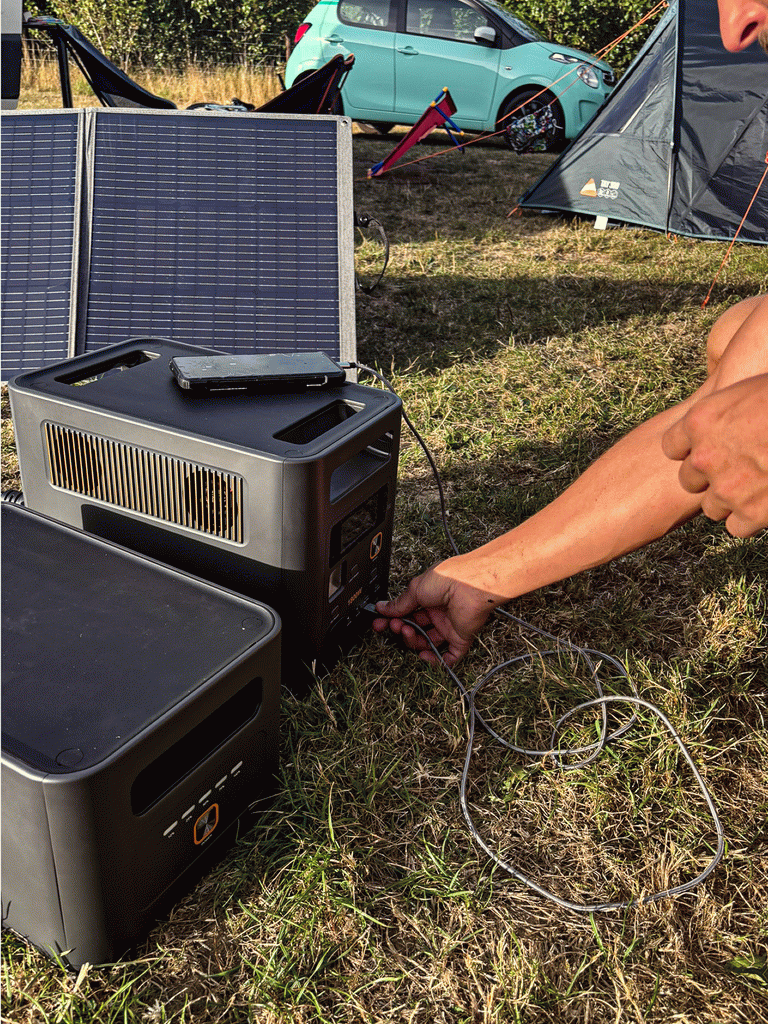
For me, 1,800W is a really useful level.
It's actually a more powerful inverter than the one we had permanently installed in the campervan we lived in for around three years. If you're interested in how a traditional setup differs from using an all-in-one power station, I've broken down our full campervan electrical system separately.
If your requirements are charging phones and camera batteries, this is massive overkill.
But if you're trying to run a genuine campervan setup with laptops, chargers, a fridge and occasional higher-draw appliances, suddenly 1,800W makes a lot more sense.
One of my favourite little features on the P180 Pro is something I initially completely misunderstood.
There's a physical switch for changing the AC charging input.
I initially had it on the lower setting and was seeing around 502W going into the battery.
I then realised you can simply flick the switch to allow faster charging.
At 88% battery, switching modes immediately pushed input up to around 751W. As the battery got closer to full, that dropped back down — at around 90% I was seeing approximately 375W. This is natural for how lithium batteries charge.
AFERIY rates maximum AC input at 1,000W and quotes around 1.5 hours for a full AC charge. I.e. if the unit is on 10%, then it will indeed charge at the full 1000W until the battery starts getting more and more full.
The exact numbers aren't actually the bit I like most.
It's the switch.
On other power stations I've tested, altering the AC charging speed can mean opening an app and digging through settings.
Here you literally flick a physical switch.
That's brilliant.
My only criticism is that I don't think the labelling makes its purpose particularly obvious. Something as simple as "Normal Charge / Fast Charge" would be much easier to understand.
I also used the station while it was plugged into the mains and charging, and it happily balanced power coming in against power going out. Even during my deliberately excessive kettle test, when the AC output eventually tripped, the battery simply continued charging.
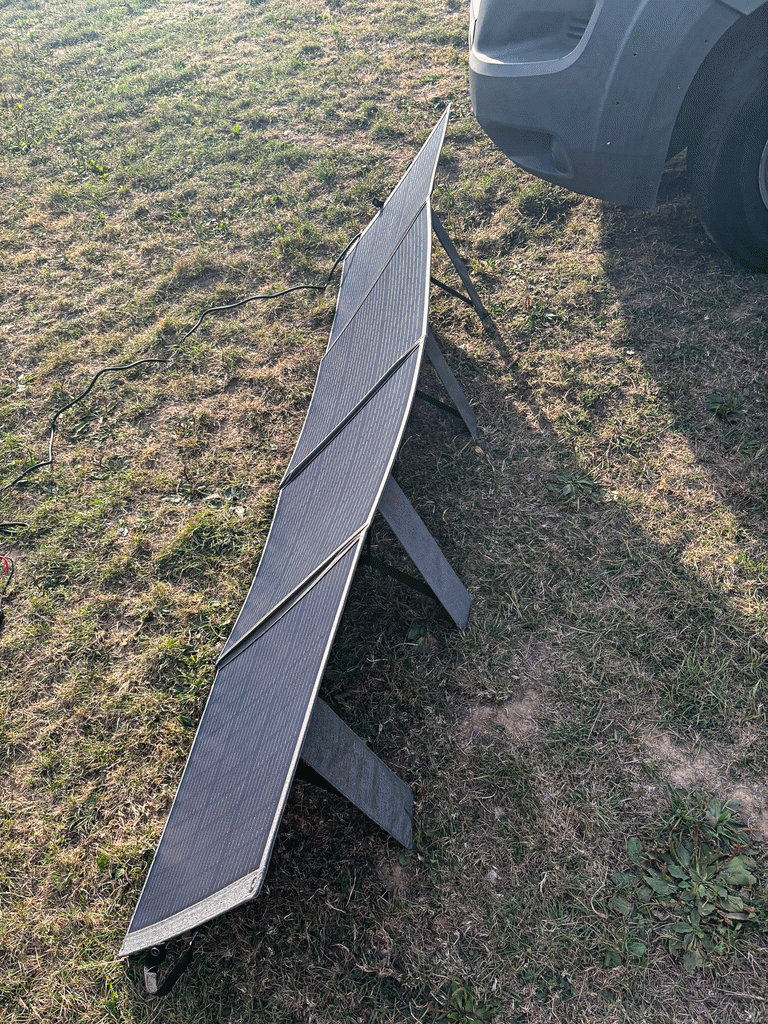
I also tested it with AFERIY's S200A1 folding solar panel.
This is a 200W monocrystalline folding panel with an IP65 rating. AFERIY claims up to 23% conversion efficiency.
Physically, it's one of the nicer folding solar panels I've used.
Solar-panel stands can be incredibly annoying, but these are simple.
The Velcro is strong, the carry handle feels solid, and the stands almost ping themselves back into place when you pack the panel away.
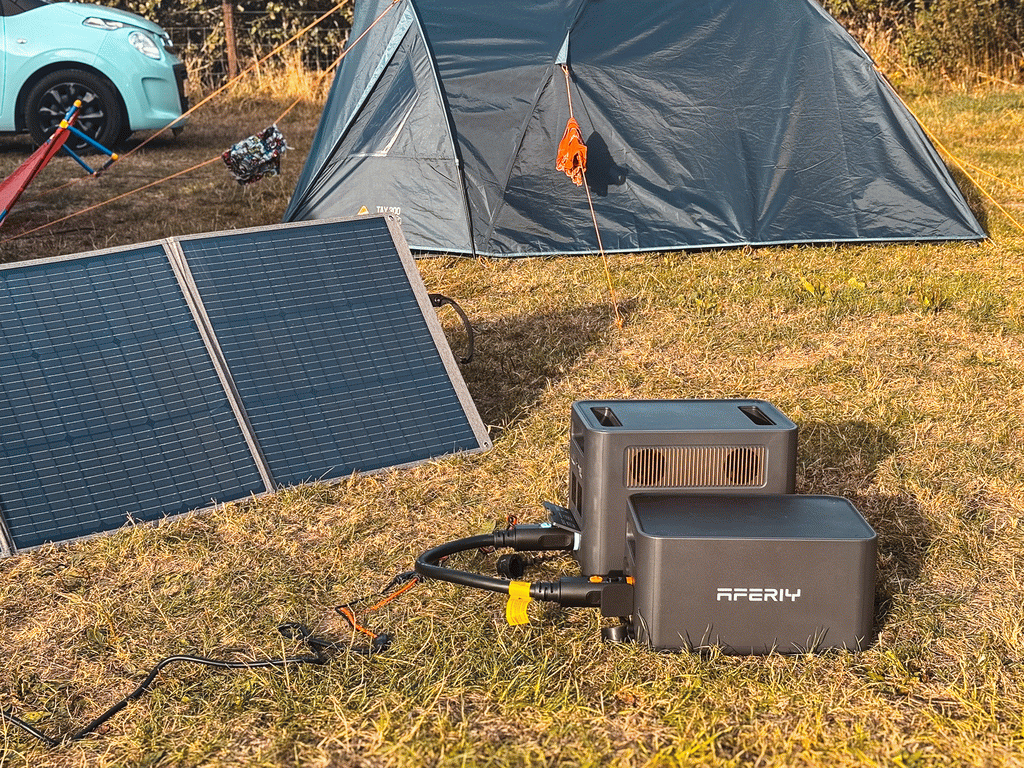
It doesn't give you endless freedom to fine-tune the angle, but the upside is that it's pretty idiot-proof.
The built-in cabling doesn't plug directly into the P180 Pro. Instead, the supplied connection system gives you different options for different power stations.
Initially this feels slightly less elegant than simply having one cable that goes straight in, but it does make the panel more versatile if you own equipment using different solar connectors.
In my test I saw around 45W going into the P180 Pro.
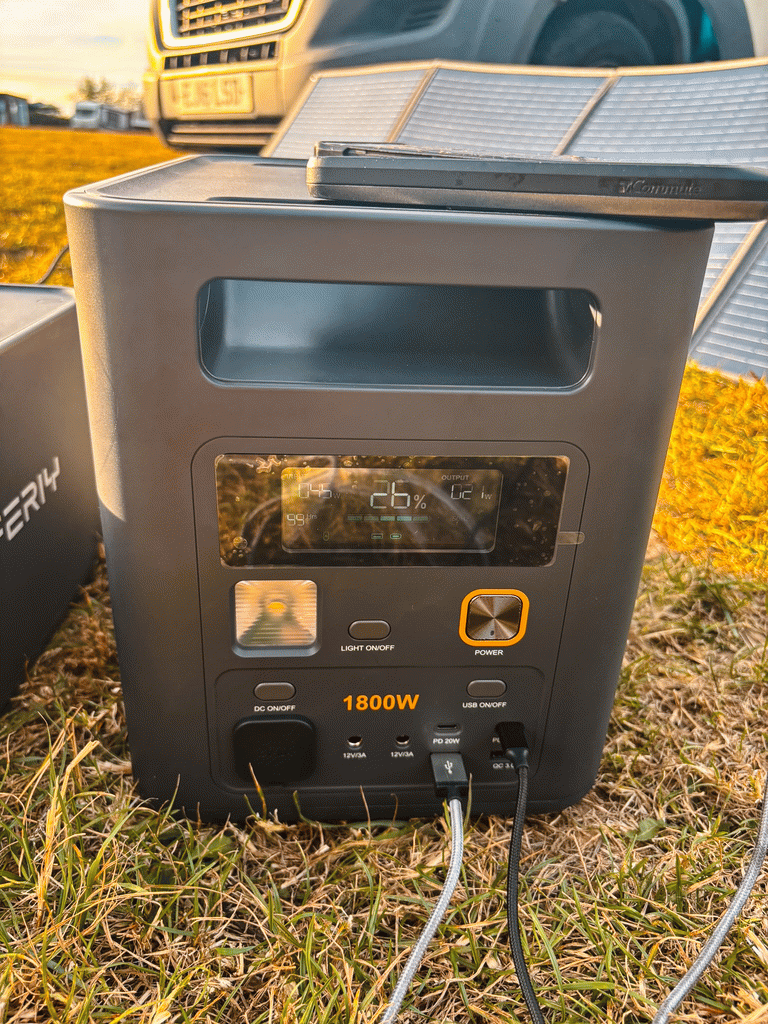
Before you look at 45W versus the 200W written on the panel and think that's terrible, this was later in the day in mild sun rather than an ideal midday laboratory-style test.
And that's an important thing to understand with portable solar anyway.
Don't look at a 200W panel and calculate:
"Eight sunny hours tomorrow, so that's 1,600Wh of free energy."
Real-world solar just doesn't work like that.
Cloud, shade, sun angle, temperature and where you can physically position the panel all affect what you actually get.
For me, folding solar makes most sense when you're staying somewhere for a while.
If I'm camping for a week, I can put the panel outside the awning, secure it and let it trickle energy into the station throughout the day.
If I'm heading to the beach for four hours, I'm probably not carrying a big folding panel down there just to chase the sun.
If solar is genuinely your main way of keeping an off-grid setup running, my advice has always been to fit as much solar as is practical for your setup rather than planning around theoretical maximum figures.
First off let's look at the stats of the P180-B ...
Each expansion battery adds another 1,024Wh, so:
The important thing to understand is that adding batteries gives you more capacity, not more output.
I.e. The Wh goes up, but the W doesn't (you can run the same things for longer, not run bigger appliances).
The P180 Pro is still an 1,800W power station.
If 1,800W isn't enough for the appliances you normally use, I wouldn't buy this and start piling expansion batteries onto it.
I'd buy a larger power station.
Imagine you're a weekend camper.
The P180 Pro is already perfect for what you need. Two AC sockets are plenty, 1,800W runs everything you use and 1,024Wh lasts a normal weekend.
Then one year you decide to head away for two weeks.
You don't suddenly need double the number of sockets or a giant 3,000W inverter.
You just need the same power station to last longer.
That's exactly where the P180-B makes sense.
Connecting it is essentially plug and play.
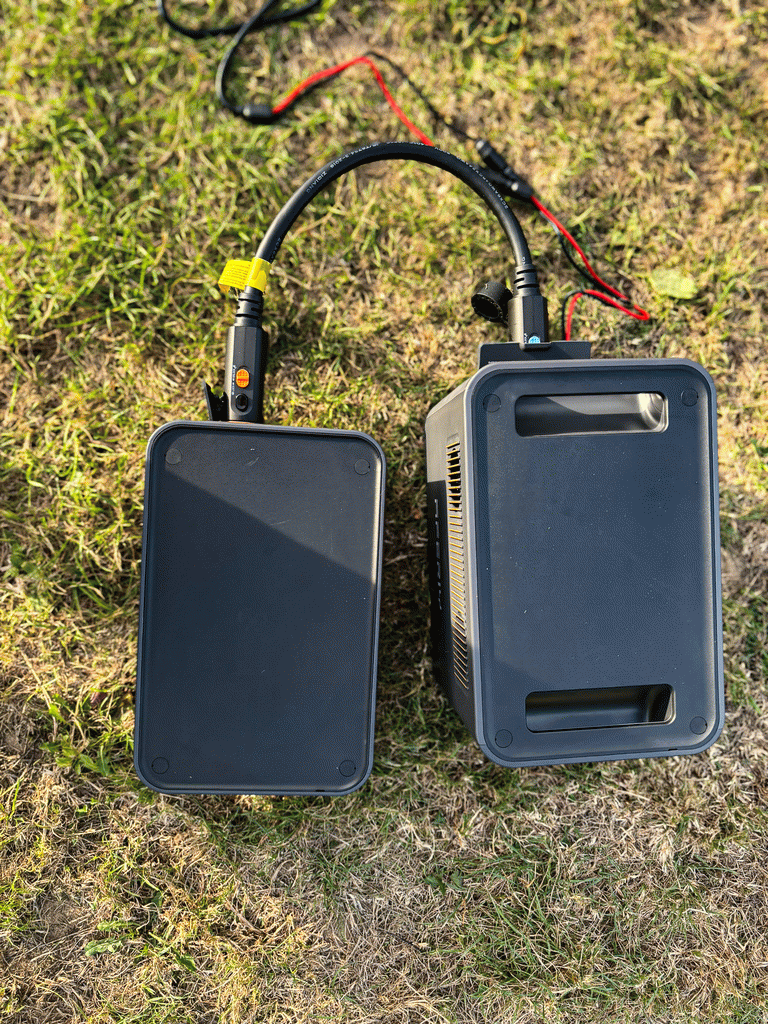
The connector and cable feel extremely substantial — noticeably more engineered than expansion systems I've used where batteries simply slot together.
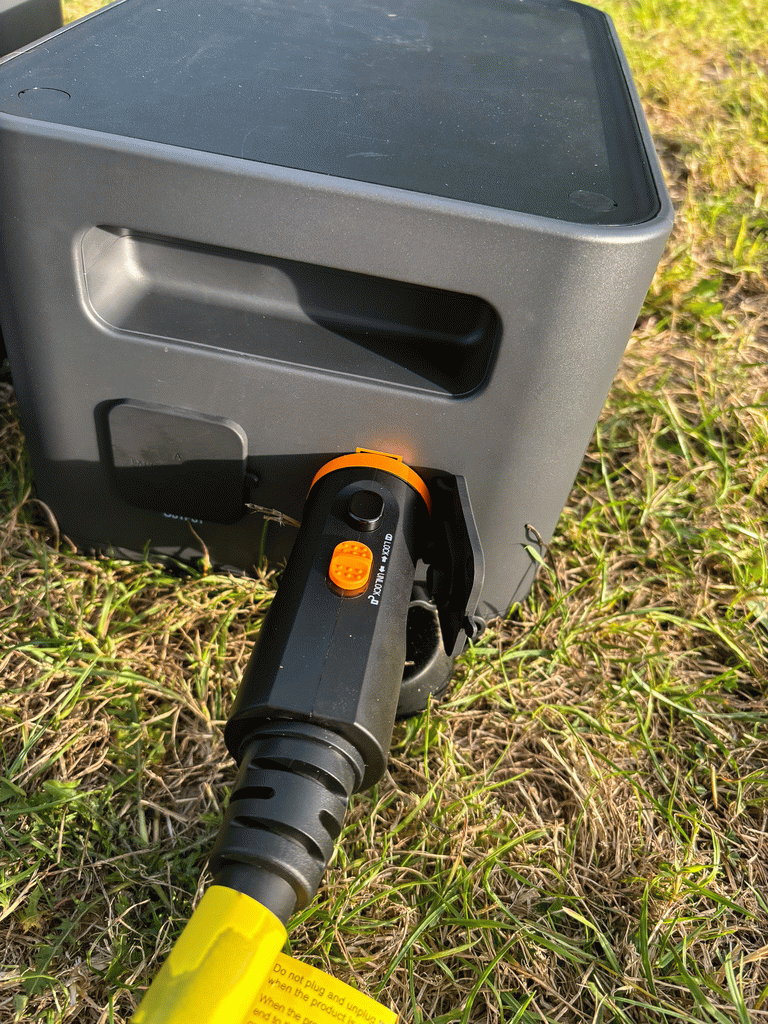
Part of me wonders if it's slightly over-engineered, but equally you're dealing with a large amount of energy moving between two batteries, so I'd rather the connection feel overly substantial than flimsy.
The thickness of the cable naturally limits how far apart you can position the two units, but there's enough movement to position them alongside each other or stack them.
Interestingly, the P180-B doesn't have its own selection of power outlets.
Initially you could see that as a downside. As other expansion units I've tested in the past from brands like BLUETTI, do have basic USB slots.
Personally, I don't think it needs them.
Its job is simply to give the P180 Pro more battery.
Again, if what you actually need is more sockets and more output, buy the bigger power station.
If you're happy with the P180 Pro but occasionally want twice the runtime, adding a battery is a really neat solution.
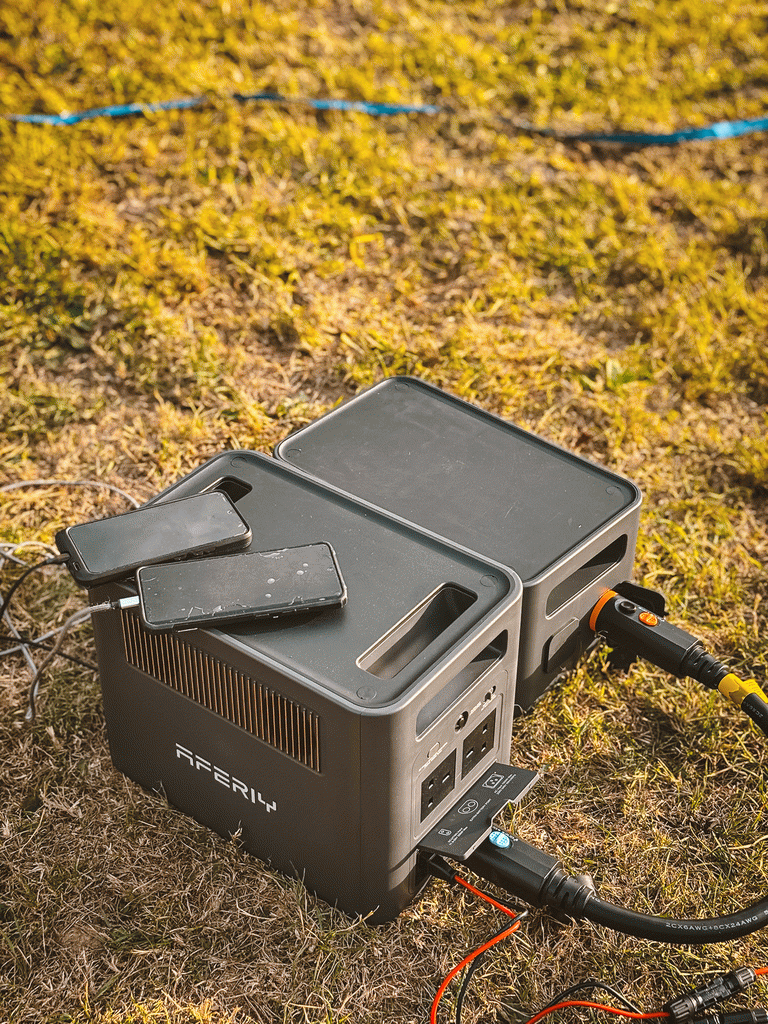
After testing everything together, my favourite things are:
There aren't many major negatives.
The built-in light is pretty piddly.
Having AC plugs on the rear can either be a pro or a con depending on how you position the station.
And there's unused space across the top where some competitors add wireless charging pads or storage compartments. In fairness, the flat top does make much more sense once you consider that the expansion batteries can be stacked as part of the system.
The closest way to put the P180 Pro into context is against some of the other brands and sizes I've personally tested.
The Acer 1800W power station is an obvious comparison if you're primarily interested in this output level.
If the expandable-battery concept appeals to you but you want substantially more capacity from the base unit, I've also tested the BLUETTI AC200L, which starts at 2,048Wh and can be expanded much further.
And if you're still deciding which brand or size of station suits you rather than specifically wanting AFERIY, my Jackery review covers everything from much smaller camping units through to larger stations.
For a broader comparison, see my best portable power stations guide.
That said, one of the things I think AFERIY is getting particularly right here is the amount of inverter power and expandability packed into such a compact unit.
So who is it for?
For me, camping and campervans are the obvious use cases.
If I was doing a relatively simple campervan conversion using gas for cooking and didn't have huge electrical demands, I could genuinely build the electrical setup around something like this.
Tuck the P180 Pro somewhere accessible, add fixed solar through the roof if desired and you're basically away.
For somebody who only wants to charge phones, however, it's far too much. There are smaller and cheaper power stations designed specifically for that.
And although the P180 Pro can technically be expanded substantially, if I was building a serious whole-home backup or permanent off-grid system, I'd probably start by looking at AFERIY's larger stations instead, such as the P310.
At the time of writing, the standard P180 Pro was listed at £469 on AFERIY's UK site, with the P180 Pro plus one expansion battery at £818. The S200A1 panel was listed separately at £249, although AFERIY changes its sales and bundle pricing frequently.
At those sorts of prices, I think it's difficult to argue with the amount of hardware you're getting.
A decent 1,800W pure sine wave inverter alone isn't a trivial purchase.
Here you're getting the inverter, LiFePO4 batteries, charging hardware, MPPT controller, USB/DC outputs, display and the ability to take solar straight into one plug-and-play unit.
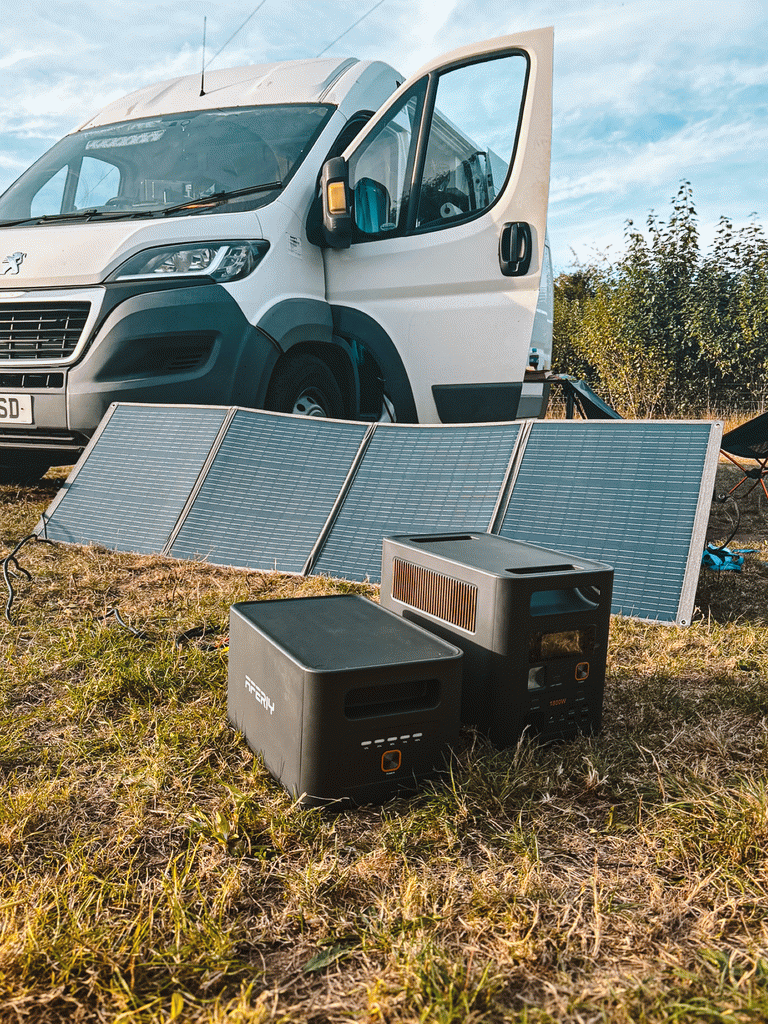
I like this power station a lot.
It's not because it has one ridiculous headline specification.
It's because the overall package makes sense.
It's small enough that I'd happily carry it around and keep it permanently in a campervan.
It's quiet enough to use while sleeping.
It's powerful enough to run genuinely useful appliances.
And if 1,024Wh eventually stops being enough, you don't have to throw the entire setup away and start again.
That modularity is probably its biggest selling point for me.
Before buying one, I'd make one decision:
Is 1,800W enough output for the appliances I realistically want to use?
If the answer is no, buy a larger power station.
But if the answer is yes, the P180 Pro gives you a really nice platform that can start at 1,024Wh and grow substantially as your power requirements change.
For camping and campervan use in particular, I think it's one of the most appealing AFERIY units I've tested so far.
Overall rating: 8.5/10.
It depends entirely on the kettle.
The P180 Pro has an 1,800W continuous AC output. During testing, I deliberately plugged in a kettle drawing around 2,650W and the overload protection safely shut the AC output down after around 19 seconds.
A lower-powered camping kettle within the P180 Pro's rated output is a much better match.
AFERIY quotes around 1.5 hours using its maximum 1,000W AC input. It also has a lower charging setting, and I really like that switching between the two is controlled by a physical switch rather than requiring the app.
Yes. It supports up to 500W of solar input. I tested it using AFERIY's S200A1 200W folding panel and saw around 45W during an evening test in relatively mild sunlight.
No. It increases battery capacity, not inverter output.
One P180-B takes the setup from 1,024Wh to 2,048Wh, while the maximum continuous AC output remains 1,800W.
For camping, campervans and other portable setups where 1,800W is enough output, I think it offers very good value.
The ability to start with 1,024Wh and add expansion batteries later is particularly appealing if your trip lengths and power requirements vary.
Well, that's about all from me! I hope you found this review useful.
If you do think I missed anythign above, then feel free to leave a comment below and I will helkp where I can ...
In the meantime, here are some other guides you may find useful:



Leave a comment
Let us know what you think!