


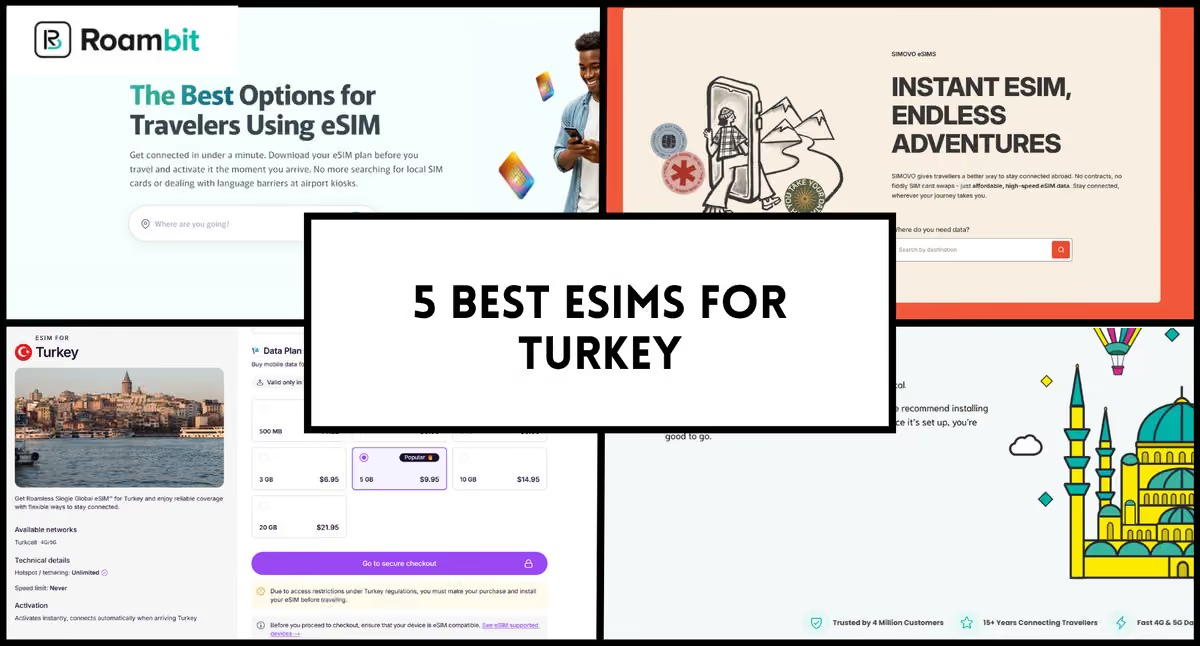
I'm back with another eSIM round up, and this time it's on a country that has actually introduced some eSIM restrictions!
If you’re heading to Turkey, getting your data sorted before you fly is no longer just a nice-to-have — it’s essential.
Since mid-2025, Turkey has restricted access to many international eSIM providers, meaning you often can’t download or activate an eSIM once you land.
The good news? eSIMs still work perfectly… as long as you install them in advance.
Below, we’ve broken down the best eSIMs for Turkey, including detailed pros, cons, pricing, and who each one is best for.
If you’re looking for my quick answer: Roambit wins on this one & you get 10% off with CAZZY10.
Don’t worry if you haven’t heard of an eSIM yet.
It’s still relatively new tech — but honestly, it’s everywhere now (and we’re very glad about that).
Gone are the days of landing in a new country and scrambling around trying to find a local SIM card. eSIMs have completely changed the game.
Put simply, an eSIM is the digital version of a traditional SIM card. Instead of inserting a physical card into your phone, it’s already built into your device and works entirely digitally.
That means you can download and activate mobile data plans straight onto your phone, allowing you to connect to networks all over the world in just a few taps.
There’s no swapping cards, no tiny trays to deal with, and no risk of losing your original SIM.
And unlike portable WiFi devices, your phone connects directly to the local mobile network — so it’s faster, simpler, and way more convenient.

Roambit is, quite simply, one of the most reliable eSIMs for Turkey right now, and that matters more than anything given the current restrictions.
What sets Roambit apart is how it actually connects you.
Instead of relying on the typical direct provisioning methods that many eSIM providers use (which are now restricted in Turkey), Roambit routes through roaming partnerships with local carriers.
That means you’re effectively “bypassing” the issues that are catching out a lot of travellers right now.
In practical terms, this translates to consistent connectivity the moment you land, without needing to mess around troubleshooting apps that won’t load or profiles that won’t install.
Setup is also genuinely simple.
You’ll receive your QR code instantly, and the eSIM installs in under two minutes.
Once you land in Turkey, your data connects automatically — no extra activation steps required.
Another big standout is flexibility. You can either choose a fixed data plan or go for a daily unlimited option, which is ideal if you’re planning to rely heavily on maps, uploads, or hotspotting across multiple devices.
Speaking of hotspotting — Roambit is one of the few providers that fully supports tethering on most plans, which makes it a strong option for couples, digital nomads, or anyone working remotely while travelling.
If you’ve read any of my other eSIM guides, you’ll know that hotspotting is an important factor for me!
On top of that, pricing becomes more competitive the longer your trip is. You select your dates in advance, and the platform adjusts your daily rate accordingly — something we don’t see done particularly well with many other providers.
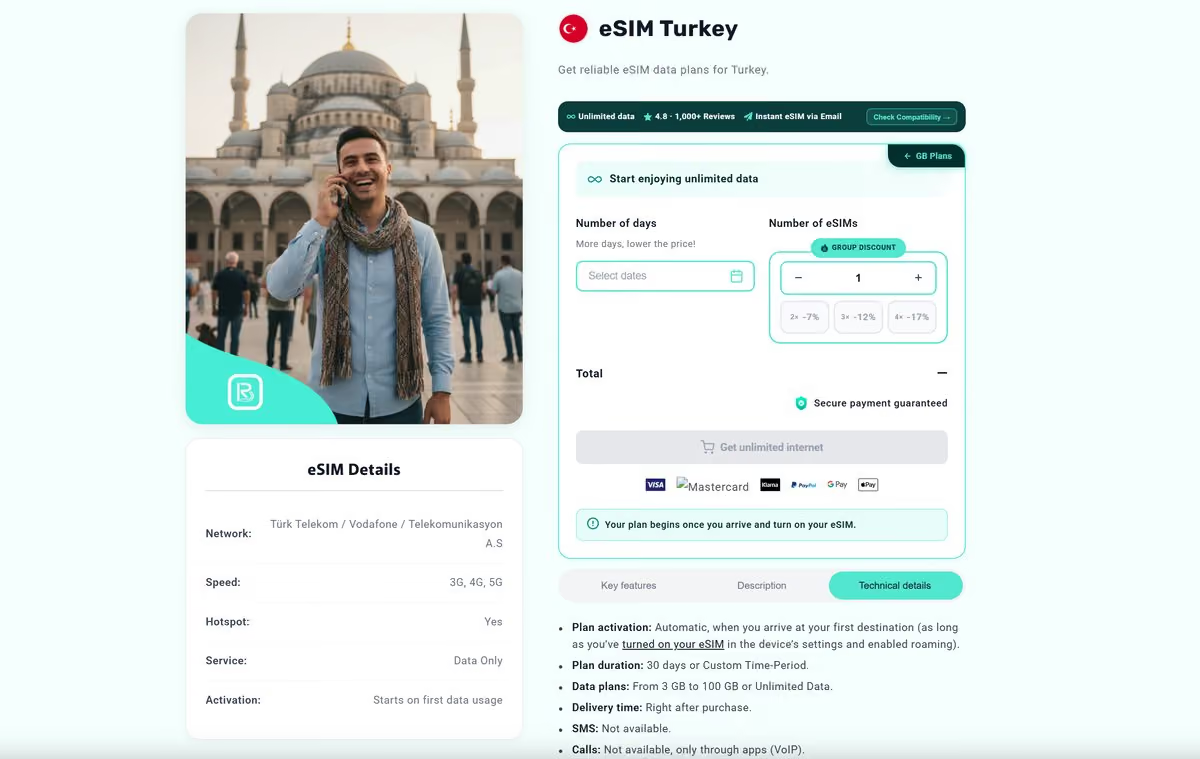
Roambit offers a wide range of plans depending on how you travel. Entry-level plans start at around $3.99 for 3GB, which is enough for lighter users or shorter trips. From there, you can scale up to larger data packages, including plans of up to 100GB for roughly $39.99.
If you’re a heavier user, the unlimited plans are where Roambit really stands out, starting from around $3.20 per day depending on trip length. The longer you travel, the lower your effective daily rate becomes, which makes it particularly good value for extended stays.
I really like the inbuilt savings if you're travelling as a group or a couple, (or you have more than one phone and need more than one eSIM- I am that person lol)
You can get discounts of up to around 15–17% when buying multiple plans together. And if you’re visiting multiple countries, you can opt for a Europe-wide plan covering 30+ destinations, rather than buying separate eSIMs.
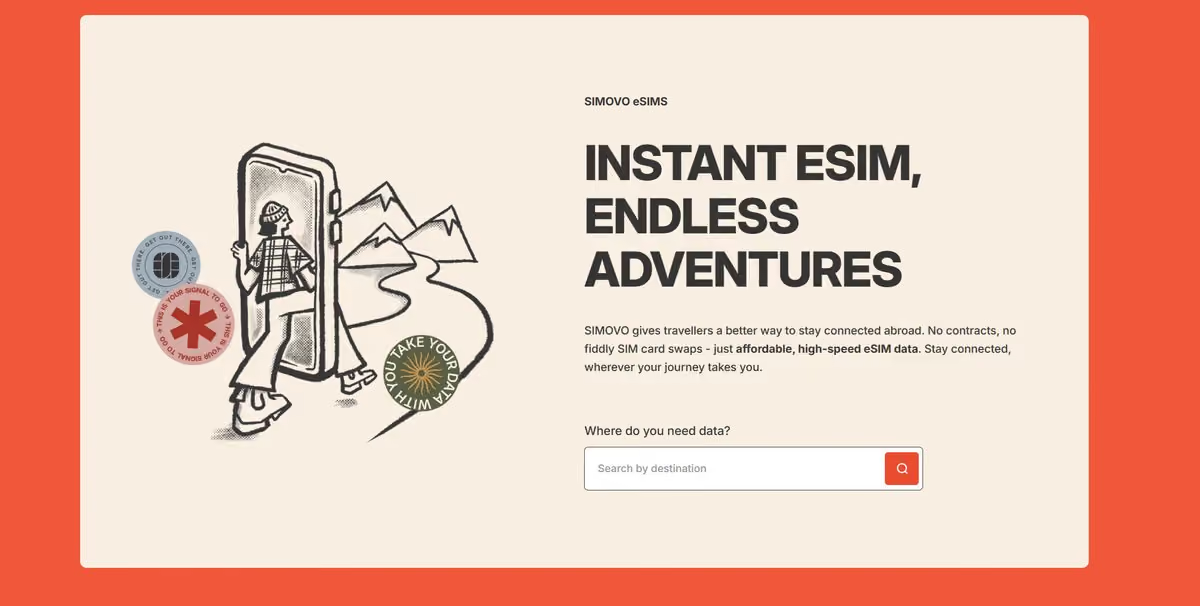
Simovo is a more stripped-back, budget-friendly option that does exactly what you need it to — without any extra bells and whistles.
It’s a good choice if you’re looking for a simple, low-cost eSIM for a short trip to Turkey and don’t need huge amounts of data or advanced features.
The experience is straightforward. You pick a plan, install the eSIM, and you’re ready to go. There’s nothing particularly flashy here, but that’s kind of the point.
Simovo focuses on fixed data plans, typically offering smaller bundles suited to short trips. Pricing is generally competitive, often coming in slightly cheaper than premium providers, particularly for lower data allowances.
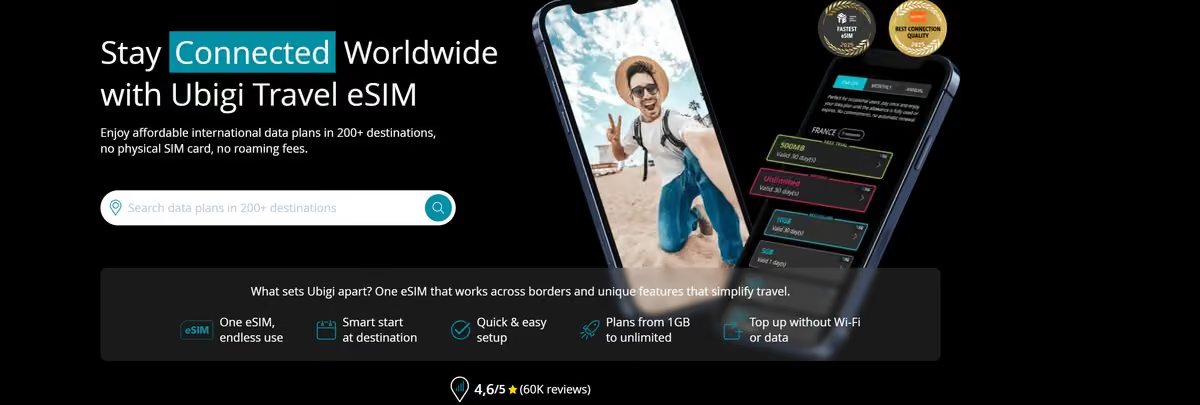
Ubigi is one of the more established names in the eSIM space, and it’s particularly strong if you travel regularly.
Rather than being Turkey-specific, Ubigi is designed as a global solution, meaning you can use the same provider across multiple trips and destinations without needing to switch platforms.
Ubigi offers a mix of one-off, monthly, and even annual plans. Pricing varies depending on how you use it, but tends to sit in the mid-range compared to other providers.
It’s not always the cheapest for a single country like Turkey, but it becomes better value if you’re travelling across multiple destinations throughout the year.
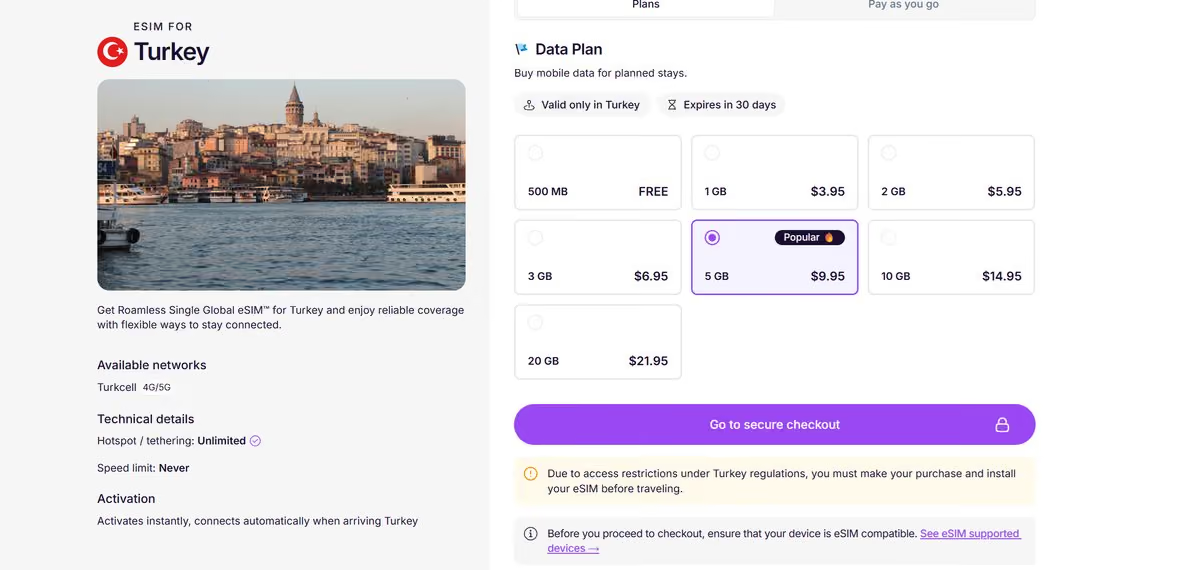
Roamless takes a different approach, offering a pay-as-you-go model instead of fixed plans.
This means you only pay for the data you actually use, which can be ideal if your usage varies or you don’t want to commit upfront.
Instead of buying a set plan, you top up your balance and use data as needed. There’s no expiry on your balance, which makes it a flexible option for longer-term or irregular travel.
However, the trade-off is that pricing can be less predictable, especially if you end up using more data than expected.
Sim Local is slightly different from the others on this list, as it combines eSIM options with physical retail locations, including airport kiosks.
That gives it a bit of an edge if you prefer having a fallback option when you land.
Plans vary depending on the network partner, but they tend to sit slightly higher in price compared to purely online eSIM providers.
You’re effectively paying for convenience and accessibility rather than cutting-edge pricing or flexibility.
Before you buy any eSIM for Turkey, it’s important to make sure your device supports eSIM technology.
Turkey is one of the few places where how you set up your eSIM matters just as much as which one you choose.
Because of the current restrictions, you need to remember to:
1. Buy your eSIM before you travel
2. Install it before you land
3. Make sure it’s ready to activate on arrival
If you do that, you’ll have zero issues.
And if you want the safest, most reliable option right now — Roambit is comfortably the best all-round choice for Turkey.
If you've got any questions or comments, drop a line below!
Love,
Cazzy



Leave a comment
Let us know what you think!