


Heading to Indonesia and wondering which eSIM to use?
Whether you’re planning a Bali holiday, backpacking Java, island hopping around Lombok and the Gilis, or working remotely from Canggu, getting your mobile data sorted before you land is one of those tiny travel jobs that makes life so much easier.
No hunting for a SIM card kiosk at the airport.
No swapping out your physical SIM.
No scary roaming charges when you accidentally open Google Maps before connecting to WiFi.
Just install your eSIM before you fly, switch it on when you land, and you’re good to go.
Below, I’ve rounded up the best eSIMs for Indonesia right now, including who each one is best for, what makes them stand out, and the pros and cons worth knowing before you buy.
If you just want my quick answer: Travelsim Asia is my top pick for Indonesia, mainly because it’s simple, well-priced, uses strong local networks, allows full hotspot use, and doesn’t force you into an app or account just to get online.
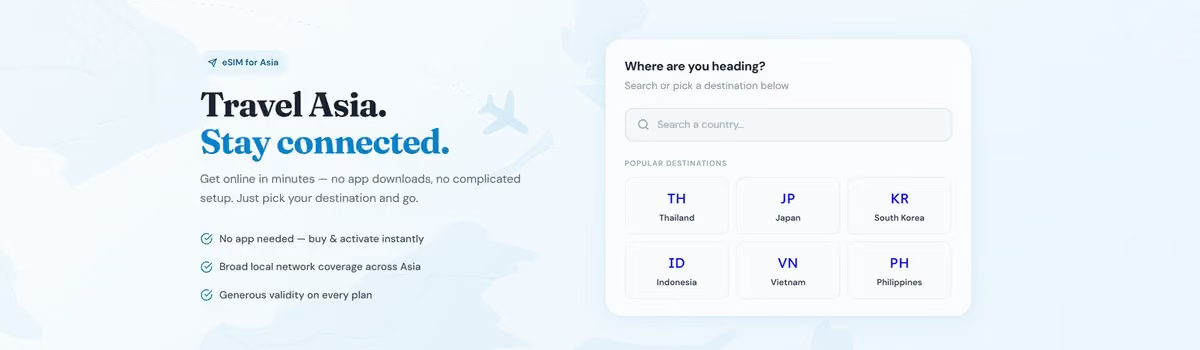
Travelsim Asia comes out on top for Indonesia because it does the simple stuff really well.
And honestly, with eSIMs, that’s what I care about most.
I don’t want a confusing app. I don’t want to create yet another account. I don’t want 50 different plan types with vague “unlimited” wording. I just want to buy the eSIM, install it quickly, and know it’s going to work when I land.
That’s exactly where Travelsim Asia feels strong.
Their Indonesia/Bali eSIMs connect to XL and Telkomsel, two of the main networks you actually want access to in Indonesia. That’s especially useful if you’re travelling beyond just one city or resort area, because coverage can vary a lot between islands, beaches, towns, mountains and rural areas.
Their plans also cover a really useful range of data allowances, starting from small short-trip options and going right up to larger data packs for longer holidays, remote work, or travellers who know they’ll be using their phone a lot.
For most travellers, I’d say the sweet spot is probably the 10GB, 20GB or 50GB plan, depending on how long you’re going for and how much you use your phone.
If you’re just using maps, WhatsApp, Grab, browsing, emails and the odd bit of social media, 10GB should be enough for many shorter trips.
If you’re uploading content, using your phone for work, tethering to a laptop, or spending a month in Bali, then the bigger plans make a lot more sense.
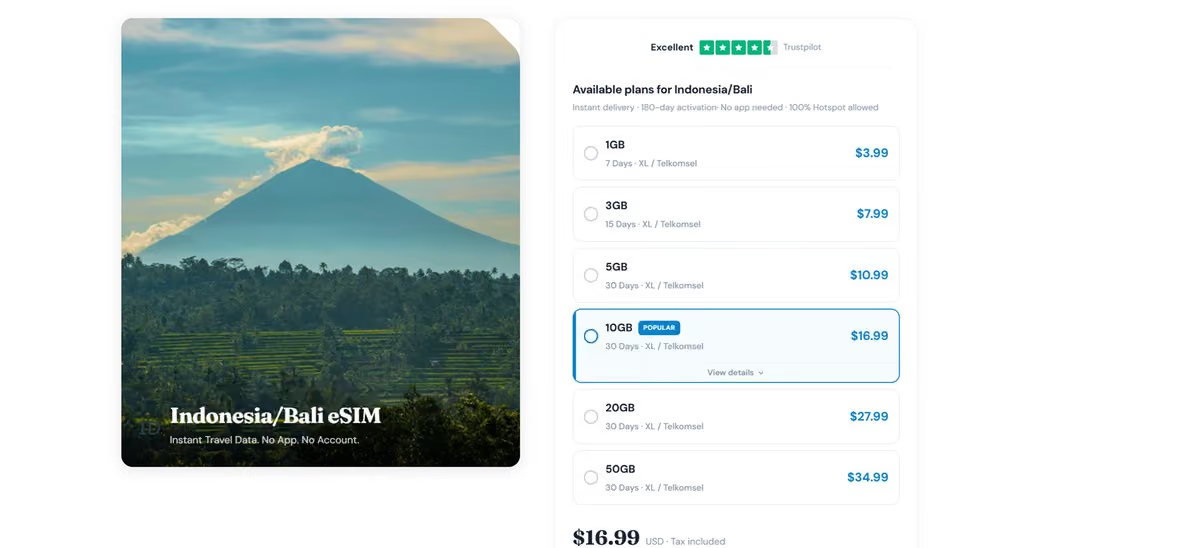
The biggest win for me is that 100% of the data can be used for hotspot.
This is really important and if you’ve read any of the other eSIM guides, you’d know the ability to hot spot is a big deal to me.
A lot of eSIM providers advertise big data allowances or “unlimited” data, but then limit how much you can hotspot to your laptop, tablet, partner’s phone, or travel companion.
That’s frustrating if you’re working remotely, travelling as a couple, or just trying to get some laptop work done from a villa, café, airport, ferry terminal or hotel room.
Travelsim Asia doesn’t do that. If you buy a fixed amount of data, you can use that data however you want.
Another thing I like is the 180-day activation window.
That means you can buy your Indonesia eSIM well in advance, install it before your trip, and then it only starts when you connect in Indonesia. That’s handy if you’re the sort of person who likes to get everything organised before you travel.
The whole process is also very low hassle.You order the eSIM, receive it by email, and install it from there. There’s no need to download an app, create an account, log in, or get pulled into a whole ecosystem just to use your data.
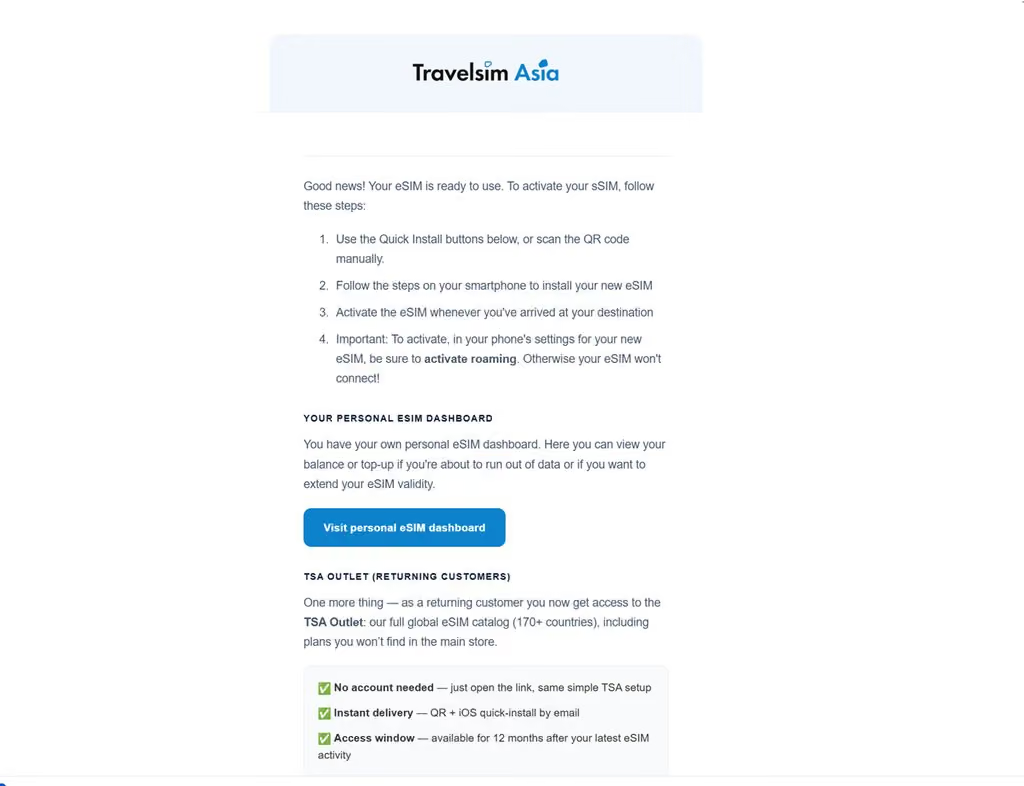
You also get access to a dashboard link where you can check your remaining data and top up if needed.
That’s a nice middle ground: you still have control over your plan, but without needing to manage everything through yet another travel app.
The thing I like about Travelsim Asia is that they’re not trying to cover every single country in the world with generic plans.
Instead, they focus on a smaller selection of popular Asian destinations, including Indonesia, Japan, Thailand, Vietnam and the UAE.
That matters because with eSIMs, the provider isn’t always the thing that matters most. What really matters is the local network they connect you to, the price you pay, whether hotspot is allowed, and whether the setup is actually simple.
Travelsim Asia also avoids “unlimited” data plans, which I actually think is a good thing.
A lot of unlimited travel eSIMs come with fair-use policies, throttling, daily hotspot limits, or other small-print restrictions. So while “unlimited” sounds great, it isn’t always as straightforward as it looks.
Travelsim Asia keeps it simpler: you pick a data allowance, you know what you’re getting, and you can hotspot that full allowance if needed.
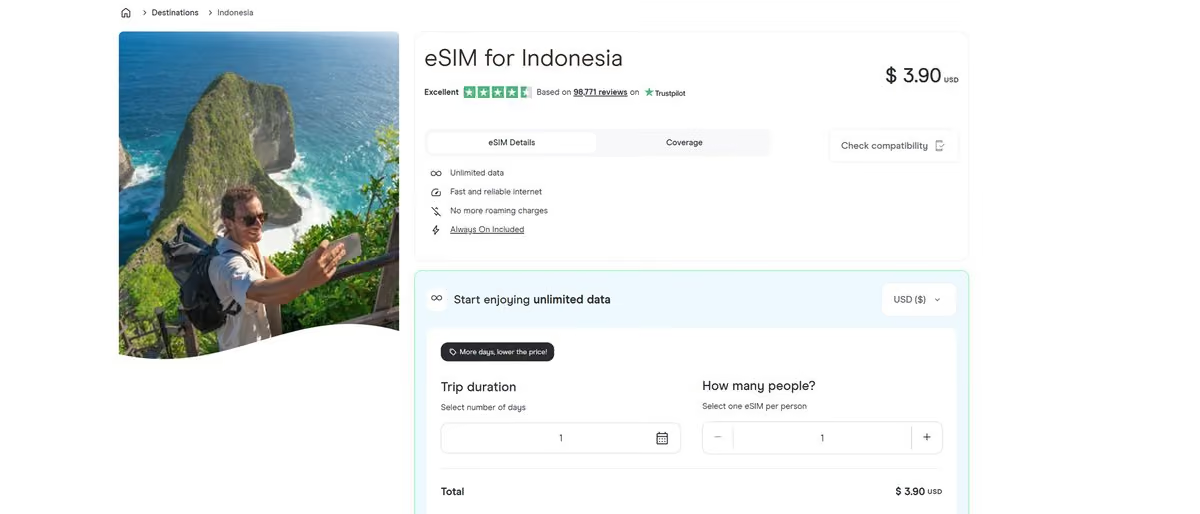
Holafly is probably one of the best-known eSIM companies out there, and it’s a strong choice for Indonesia if your main priority is unlimited data.
Their Indonesia eSIM gives you unlimited mobile data for the number of days you choose, which is ideal if you don’t want to think about how many GB you’re using.
This can be really useful if you’re someone who uses data heavily for Instagram, TikTok, YouTube, video calls, Google Maps, Grab, WhatsApp, browsing, email, and everything else.
It’s also great for peace of mind. You don’t have to keep checking your data allowance or worry about topping up halfway through your trip.
Holafly also has 24/7 customer support, easy installation, and a very polished setup process.
The main downside is the price.
Holafly is usually more expensive than fixed-data eSIMs, especially if you’re travelling for a couple of weeks or a month.
The other important thing to know is that hotspot is limited. So while your phone data may be unlimited, you can’t necessarily share unlimited data with your laptop, partner, tablet, or other devices.
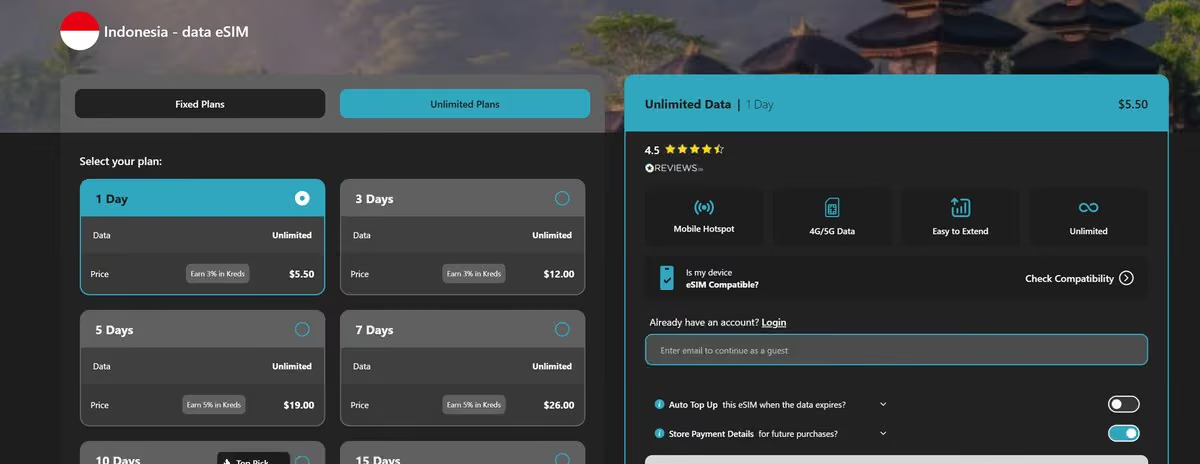
KnowRoaming is another solid eSIM option for Indonesia, particularly if you like the idea of fixed-rate data with clear pricing.
They’re not necessarily the flashiest option on this list, but they’re a familiar name in the travel SIM/eSIM space and offer straightforward data plans for a wide range of countries.
For Indonesia, their plans start from a low entry price, which makes them worth considering if you only need a small amount of data for a short trip.
I’d see KnowRoaming as a good middle-ground option. It’s not the cheapest at every data level, and it’s not the best for unlimited data, but it’s simple enough and should suit travellers who just want to buy a plan and know what they’re paying upfront.
Jetpac is another good Indonesia eSIM provider, especially if you want larger data plans and don’t mind using an app.
Their Indonesia plans include a good range of options, from smaller short-trip plans through to bigger data packs for heavier users.
The larger plans can be especially useful for longer trips, remote workers, or anyone who knows they’ll use more data than average.
Jetpac also includes some fun extras, such as keeping access to useful apps like WhatsApp, Grab, Uber and Google Maps after your data runs out on certain packs. That’s a nice safety feature if you’re somewhere unfamiliar and need to order a ride or navigate back to your accommodation.
They also offer some travel perks through the app, including SmartDelay airport lounge access if your flight is delayed, though I wouldn’t choose an eSIM purely for that.
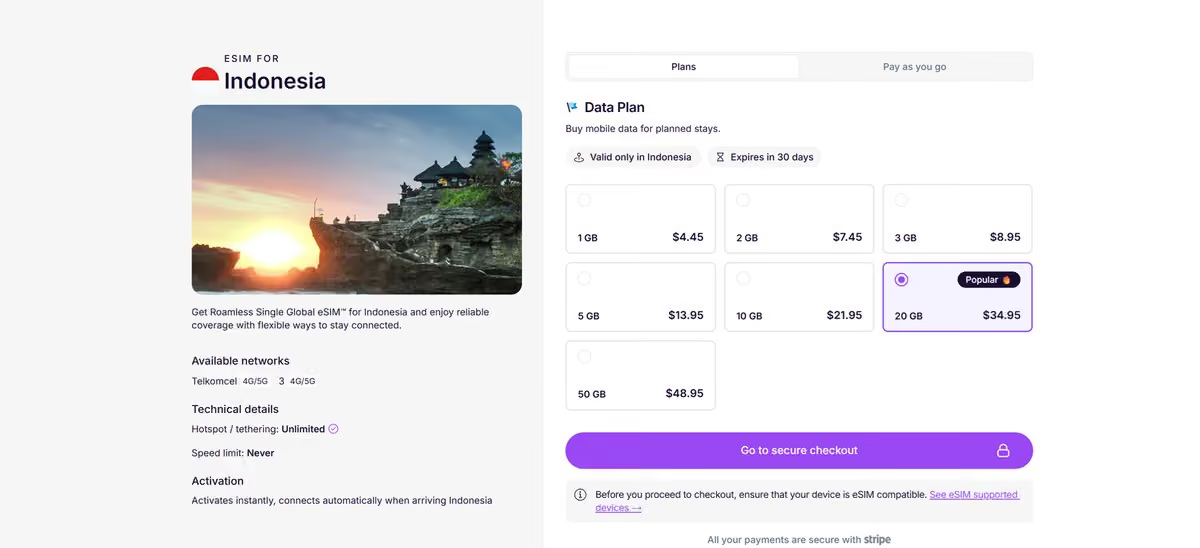
Roamless is a little different from the other eSIMs on this list.
Instead of only focusing on single-country travel eSIMs, Roamless works more like a global eSIM that you install once and reuse across destinations.
You can either use pay-as-you-go credit or buy fixed data plans. The pay-as-you-go option is especially interesting because unused credit doesn’t expire, which is handy if you travel often but don’t always know where you’re going next.
For example, if you’re visiting Indonesia as part of a longer Asia trip, or you regularly hop between countries, Roamless could make sense.
You don’t need to keep installing a new eSIM for every destination. You can just keep the same global eSIM and use your balance as you go.
That said, for a straightforward Indonesia-only holiday, I don’t think it beats Travelsim Asia on simplicity or Indonesia-specific value.
Roamless is more about flexibility than being the cheapest or most targeted option.
So there you have it. My guide on the best eSIMs for Indonesia. My top pick for Indonesia is Travelsim Asia. The plans are well priced, the setup is refreshingly simple, and the fact that all data can be used for hotspot is a big advantage.
If you’ve got any questions, drop them below!
Love,
Cazzy



Leave a comment
Let us know what you think!