


Washington DC was a city I had wanted to visit for years.
But if I’m honest, I wasn’t entirely sure what to expect from it.
I knew there would be big monuments, lots of museums and an awful lot of American flags.
I knew I wanted to see the White House, stand inside the Lincoln Memorial and walk around all of those places I had seen in films since I was a kid.
But beyond that?
Not a clue.
What we found was one of the most fascinating cities we have visited in the United States.
It was also one of the most exhausting!
Let’s get straight into it …
We visited in May 2026, landing from the UK with fairly aggressive jet lag, though we did get to fly First Class from London for the first time!
We committed ourselves to walking almost everywhere in the city; and our visit fell during a spell of serious heat and humidity.
Oh, and huge parts of the city were being dug up and prepared for America’s 250th anniversary celebrations.
So this is not one of those itineraries where we pretend we effortlessly bounced between 17 attractions a day, ate in all the best restaurants and somehow still had the energy to stay out until midnight.
This is the exact three-day Washington DC itinerary we followed.
Including what we loved, what disappointed us, what we accidentally stumbled across, what we failed to see and what we would change if we did it again.
And honestly?
Three days felt just about perfect.
P.S. If you are travelling from outside the US, it is also worth sorting your mobile data before you arrive. We used our phones constantly for walking routes, Metro directions and last-minute reservations, and we have a separate guide to the best USA eSIMs we have personally tested.
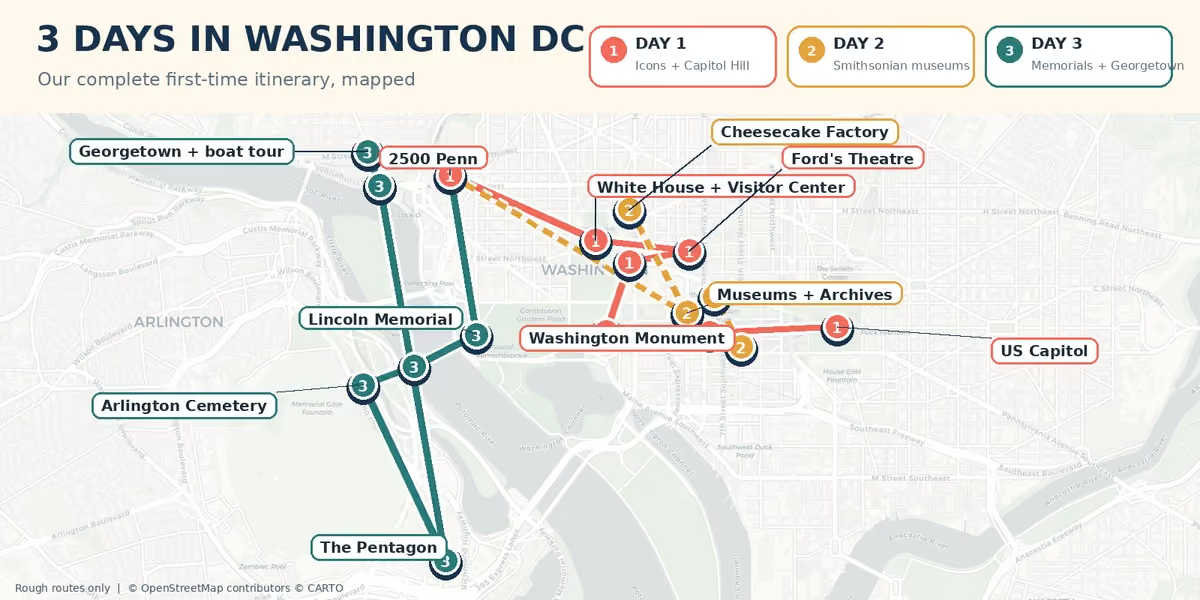
Day 1: The heart of political Washington
The White House, Ford’s Theatre, White House Visitor Center, Washington Monument, National Mall and a tour of the US Capitol.
Day 2: Museums, American history and an obscene amount of cheesecake
The National Air and Space Museum, National Archives, National Museum of Natural History and The Cheesecake Factory.
Day 3: Memorials, Arlington and Georgetown
The Lincoln Memorial, Arlington Memorial Bridge, our failed attempt to visit Arlington Cemetery, the Pentagon, a Potomac boat tour and drinks in historic Georgetown.
This is almost exactly how we did it, but I have improved a few parts based on what we learned. Book the popular free attractions early, visit the Library of Congress while you are already at the Capitol and do not waste time going to the Pentagon just to look at it.
If you only have one day, or simply do not fancy covering these distances on foot, this full-day Washington sightseeing tour combines the White House, Capitol, Lincoln Memorial and several other major stops. In season, it also includes a Potomac cruise.
Yes. Three days is enough for a really good first visit to Washington DC.
You can see the major monuments, tour the Capitol, visit two or three museums and still leave some room for actually enjoying the city.
You could force almost everything into two very long days, but I am not convinced you would enjoy it.
We were jet-lagged from day one, so never had it in us to go sightseeing from dawn until night. Instead, we spaced everything out across three days and I am SO glad we did.
With the heat, humidity, mental overload and walking, we were knackered each day, but in a good way.
And even without the jet lag, I think this is a good amount to do each day without constantly watching the clock or sprinting between reservations.
If you have four or five days, you could easily add more museums, spend longer in Georgetown, properly visit Arlington National Cemetery and explore some of the art galleries.
We saw almost everything we wanted, although we skipped the art museums completely.
We woke up early because of our body clocks, absolutely pumped full of energy and ready to crack on!
Our accommodation was very well situated for a few reasons, which is why we had chosen it.
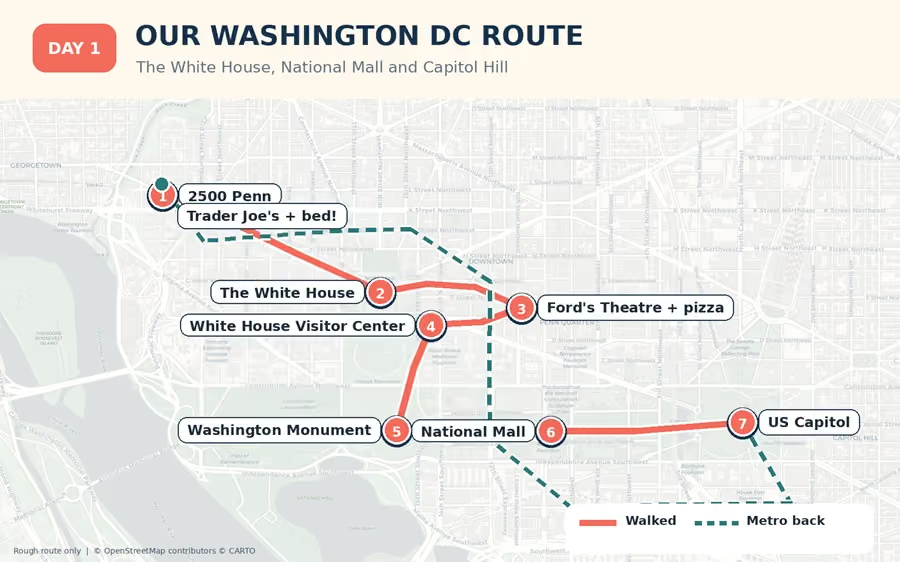
We stayed at 2500 Penn in Foggy Bottom, roughly a 20-minute walk from the very heart of the action.
For the money, you get SO much space. It was pretty dated, but had a kitchen, sat opposite Trader Joe’s and was an easy walk from the monuments and Georgetown. We booked it largely because of the fact it was:
Basically, Foggy Bottom offered the right balance without paying to sleep beside the White House.
That first walk into central Washington immediately made us feel like we had arrived.
Our first stop was the White House.
It is one of the most recognisable buildings on Earth, and I expected a big moment.
Unfortunately, it was one of the more disappointing parts of our trip.
Not because of the building itself, but because there was a LOT of construction around it, including a large stage being built for America’s 250th anniversary.
The views from both sides were badly affected.
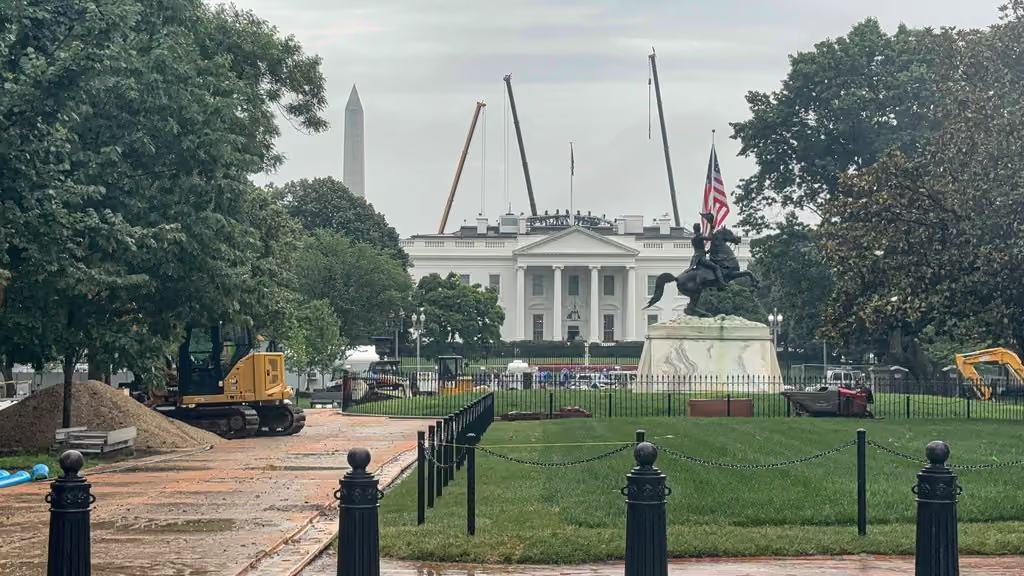
We actually walked around to the opposite side later, expecting to get a better angle.
Nope.
Still construction.
It was temporary and we were unlucky, but we never got the classic White House view I had pictured.
A proper White House tour requires far more planning than simply joining a normal attraction tour. Requests should be submitted well before your visit, and the process is less straightforward for international visitors. We were not able to arrange one.
From the White House, we took a slightly weird detour in search of food.
Our body clocks were all over the place, and we found it weirdly difficult to locate casual grab-and-go food around this part of Washington. Annoyingly, you can;t really find any of those typical American diners in this part of Washington.
Eventually, we found &pizza.
I would 100% recommend it for a quick and easy meal.

Then, entirely by chance, we stumbled across Ford’s Theatre, where Abraham Lincoln was shot.
Directly opposite is Petersen House, where he was taken after the shooting and died the following morning.
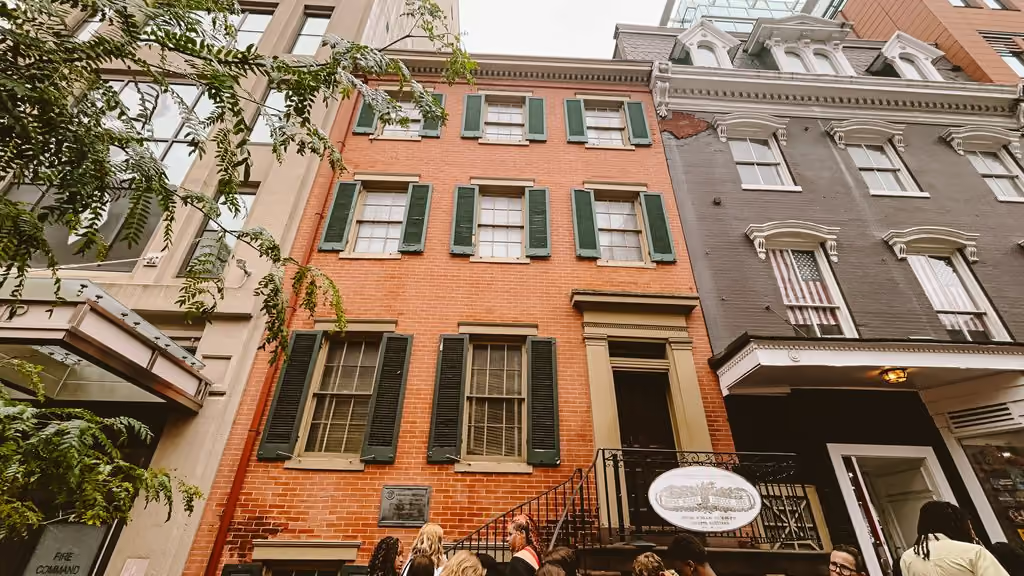
This was not in our plan whatsoever. We found it while hunting for food, then lacked the patience to join the large queue.
But I am so glad we found it.
It was one of those unplanned moments that makes walking around a city worthwhile.
If I were doing this day again, I would reserve Ford’s Theatre in advance and build it properly into the route.
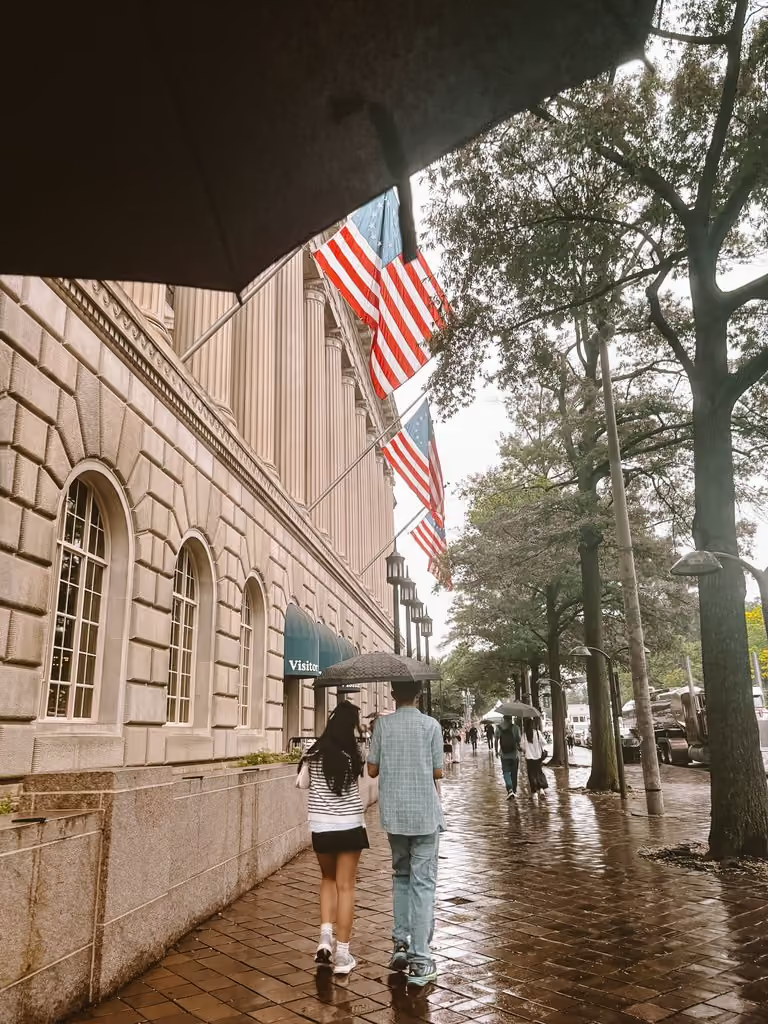
After our lacklustre view of the White House, we headed to the White House Visitor Center.
Well, after being screamed at by an angry security woman for not clearing a walkway quickly enough.
Welcome to Washington!
The visitor centre was actually pretty cool. It covers past presidents, their time in the White House and how different families viewed living there.
You get more of an understanding of what it must be like behind the cameras.
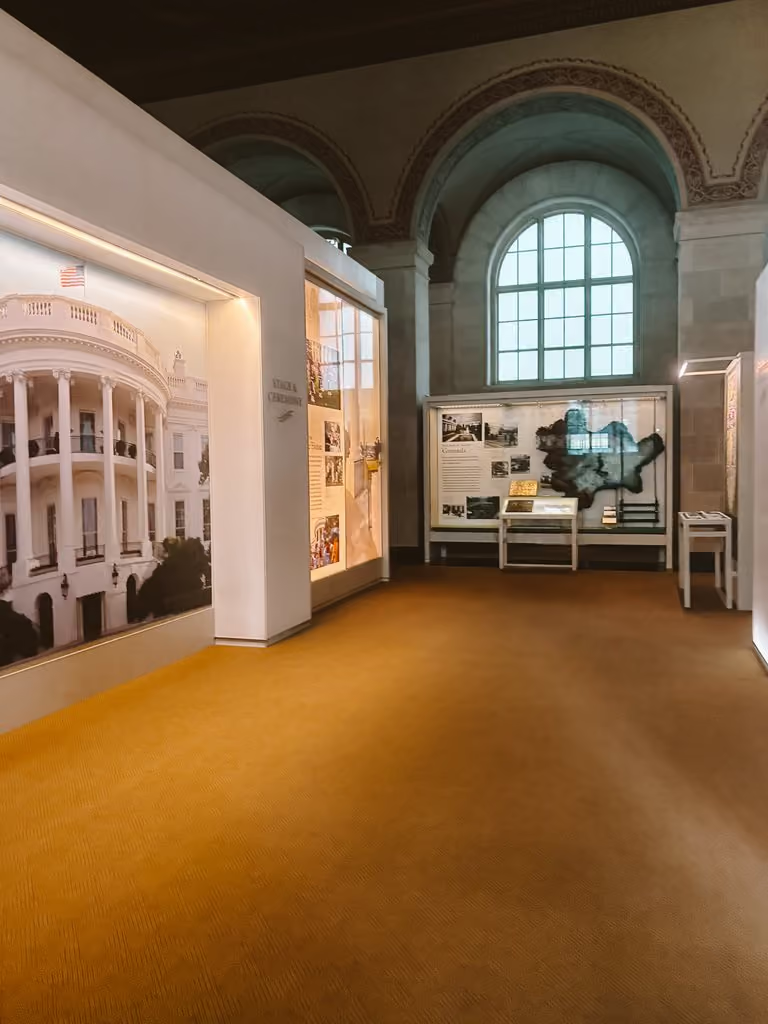
It made us think about actually living there, raising a family and trying to maintain normality inside one of the most famous buildings in the world.
It rescued the White House part of the day for us.
If you cannot arrange a proper tour, I would definitely pop in. It is free and does not require a ticket.
From here, we circled back around to the other side of the White House.
As I mentioned, the view was not much better.
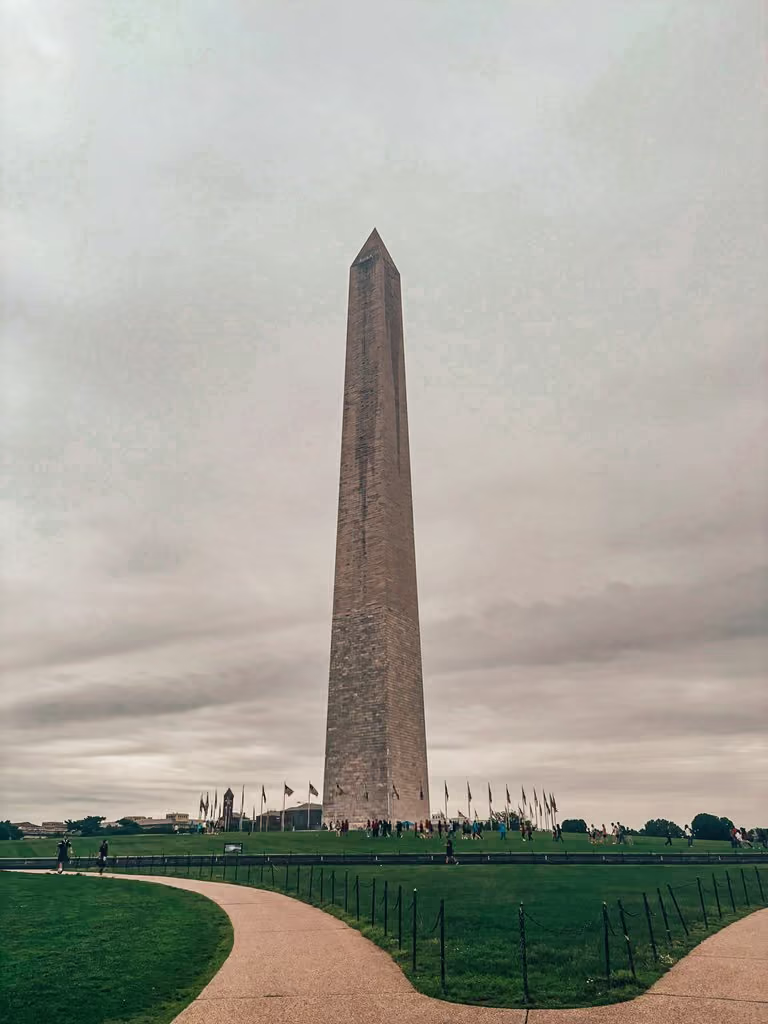
But the route naturally leads you towards the Washington Monument.
And this WAS cool.
It is another structure you have seen so many times on screen that it feels familiar before you have ever been there.
Completed in 1884, it briefly became the world’s tallest structure before the Eiffel Tower overtook it.
You can read more about its history on the National Park Service website.
Unfortunately, we did not get tickets to go inside.
To avoid our mistake, advance tickets are released at 10 am Eastern Time, 30 days before the tour date, with another limited batch one day before.
Entry is free, although online reservations currently carry a $1 service charge. A few same-day walk-up tickets may also be available. Check the official Washington Monument ticket page.
So we had to settle for staring upwards from outside.
Still very cool. Just not quite as cool as going up it.
From the Washington Monument, you can look across towards the Lincoln Memorial.
But don’t peek for too long … we are saving that for day three.
Instead, we turned left and began the long, straight walk towards the US Capitol.
This should be one of Washington’s grandest walks, with the Capitol directly ahead and many of the city’s biggest museums lining the route.
Unfortunately, we once again met a huge amount of construction.
Large sections were closed or diverted, so we never got the full view I had imagined.
We also had a Capitol tour to catch. Free Capitol tours can have same-day space, but I would reserve yours in advance.
If the heat, distance or sheer amount of walking concerns you, this is also the part of the trip where a guided electric cart tour of Washington’s monuments makes sense. It covers the White House, Washington Monument, Capitol Hill and Lincoln Memorial in a few hours without sacrificing the outdoor views.
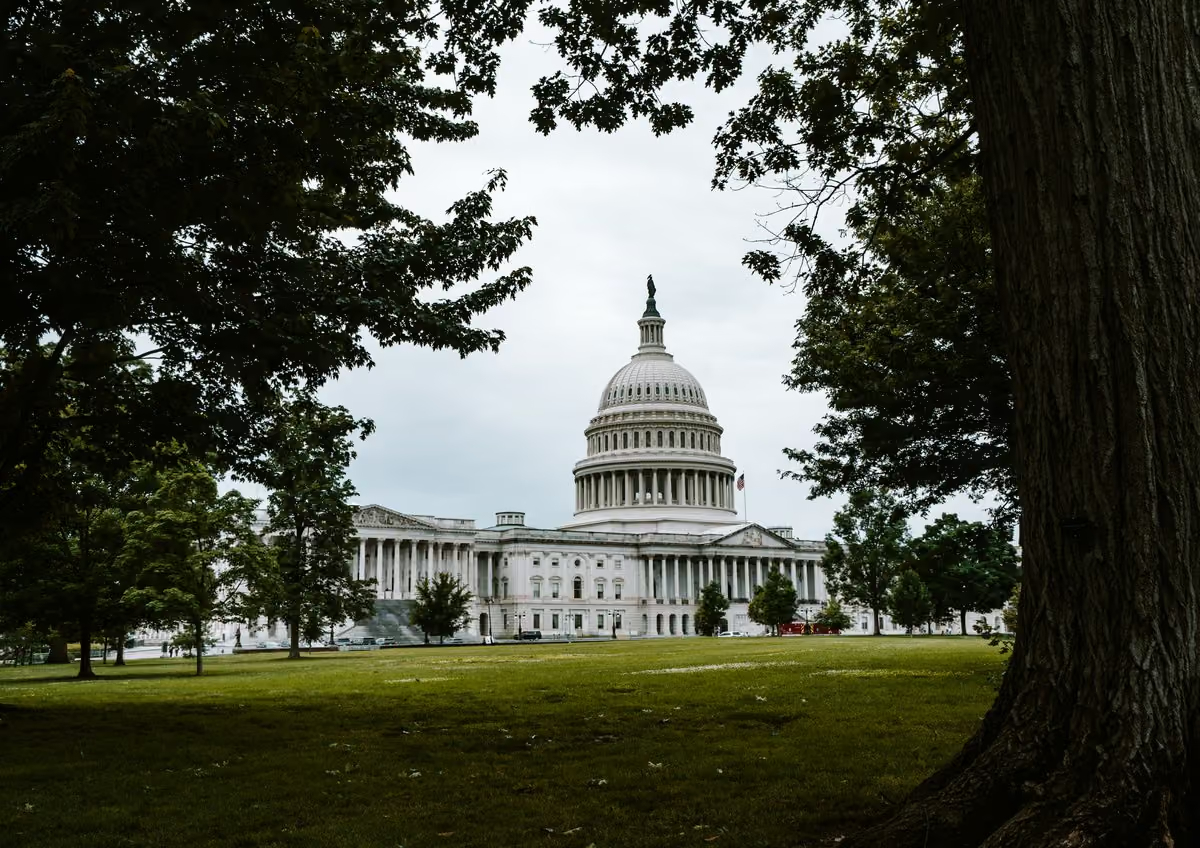
The US Capitol has some of the strictest security rules of any attraction we visited in Washington.
We arrived carrying leftover pizza, water and an aerosol can of suncream.
All had to go.
Please read the Capitol’s official prohibited-items list before you arrive and do not make our mistakes.
The tour itself lasted around 20 minutes and gave us a useful overview of the building and American politics.
I understood more clearly what the Senate actually was, how Congress worked and how its powers differ from those of the president.
And if nothing else, the Capitol is an absolutely stunning building.
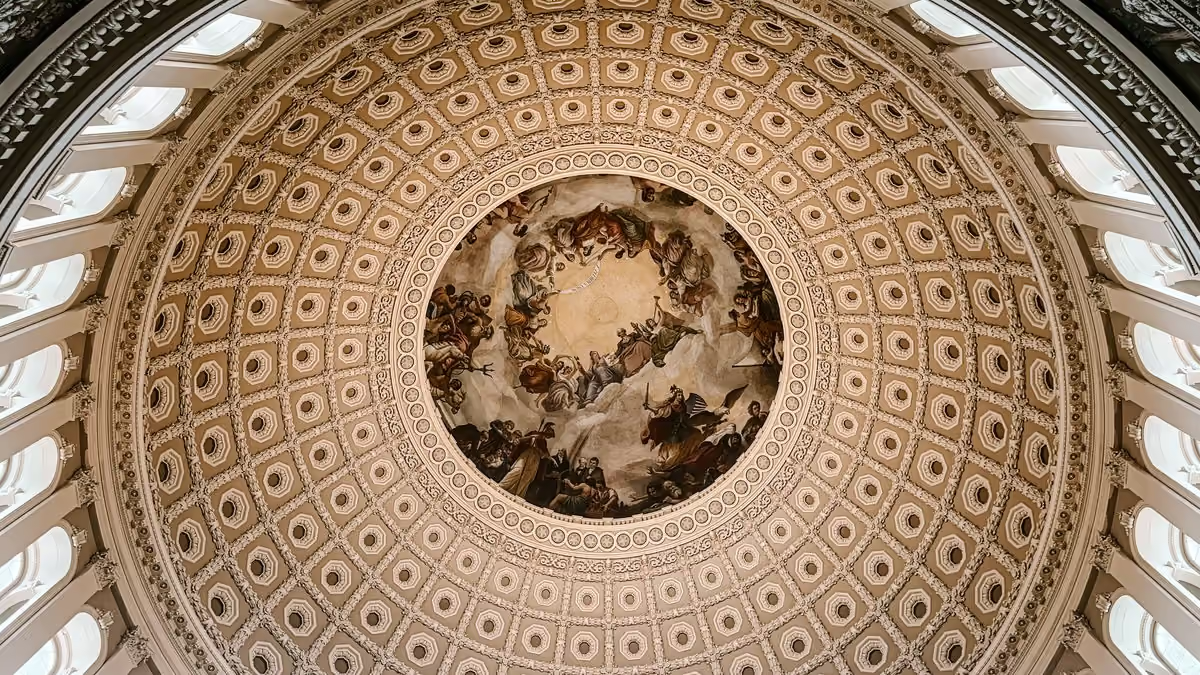
The designs, statues and scale of the rooms made it one of our Washington highlights.
Right after visiting, we went to the Library of Congress.
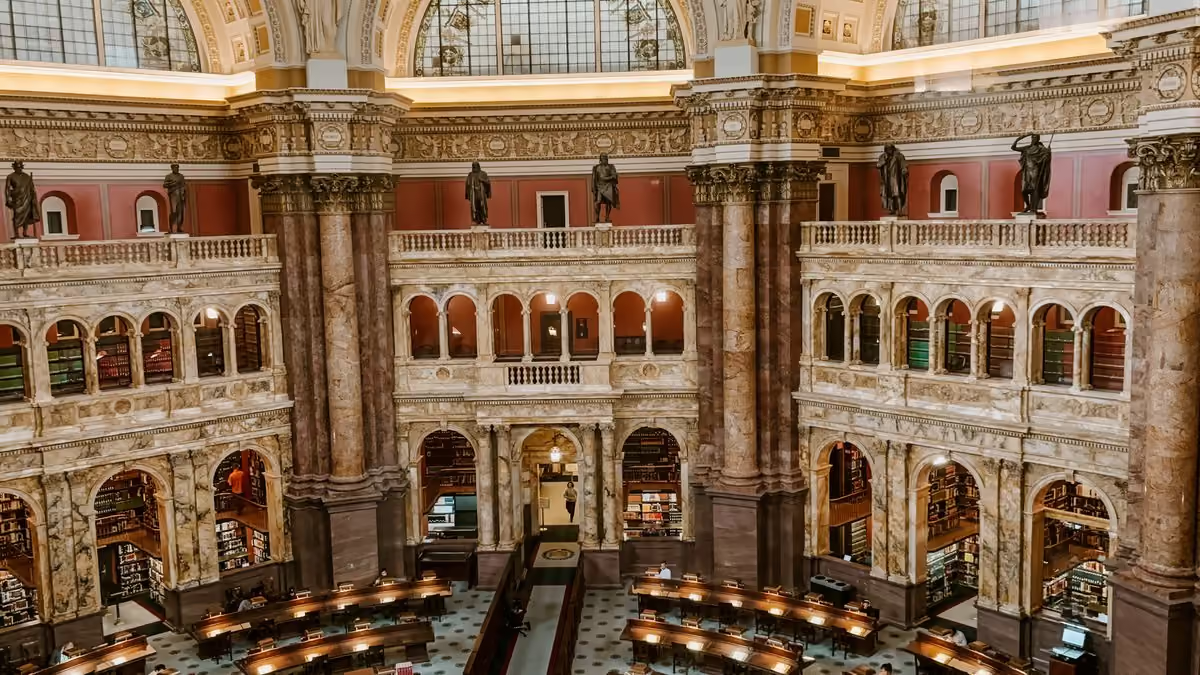
You can reach it from the Capitol Visitor Center through a tunnel, but it requires its own free timed ticket. These are normally released 30 days ahead, with some same-day tickets released online at 9 am Eastern Time. Check the official Library of Congress visitor page and book it immediately after your Capitol slot.
If you would rather have someone connect the history properly, this guided Capitol, Supreme Court and Library of Congress tour puts the whole area into one half-day experience. That is probably what I would choose on a return visit.
It was during the Capitol tour that I finally started to understand what Washington DC actually IS.
That sounds weird.
But being inside the Capitol helped me understand why all of these buildings are so huge.
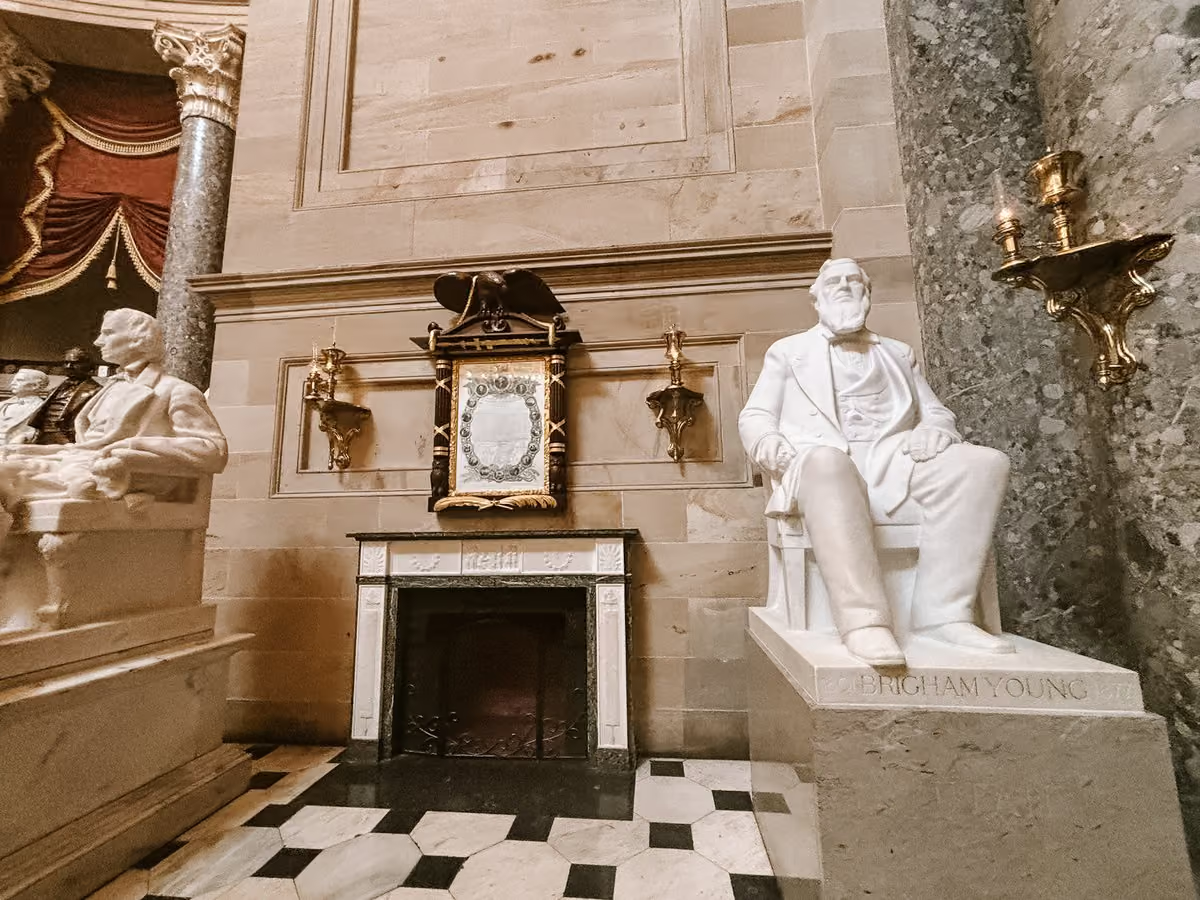
Why are there so many enormous monuments?
Why does everything borrow so heavily from ancient Greek and Roman architecture?
My very brief and probably oversimplified opinion is that, when Washington was being created, the country had almost nothing holding it together.
The states were spread across enormous distances.
The new nation was divided, unstable and still trying to work out what it was.
So they built these grand structures in what was, at the time, largely the middle of nowhere.
They were forging a base that could unite people from thousands of miles apart.
A historic and important capital that everyone could feel they shared.
That idea developed more as we visited the other memorials. And by day three, inside the Lincoln Memorial, it really clicked for me. But more on that later …
After the travel day, jet lag and miles of walking, we were BEAT. We caught the Metro back towards our accommodation for the first time.
We had always planned to walk wherever possible because looking at the buildings is a huge part of Washington. But the Metro became extremely welcome once our legs gave up.
On the way back, we grabbed some food from the local Trader Joe’s.
Seriously, Americans, your food pricing makes no sense.
Basic pasta was stupidly expensive, while other things that should cost a fortune were dirt cheap.
We made something light in the room and basically passed out.
Day one complete.
If you still have energy, Washington’s monuments look completely different once they are illuminated. This three-hour Washington monuments night tour stops at the White House, Capitol, Lincoln Memorial and several other landmarks. We absolutely did not have the energy, but it would be a strong addition for a less jet-lagged person!
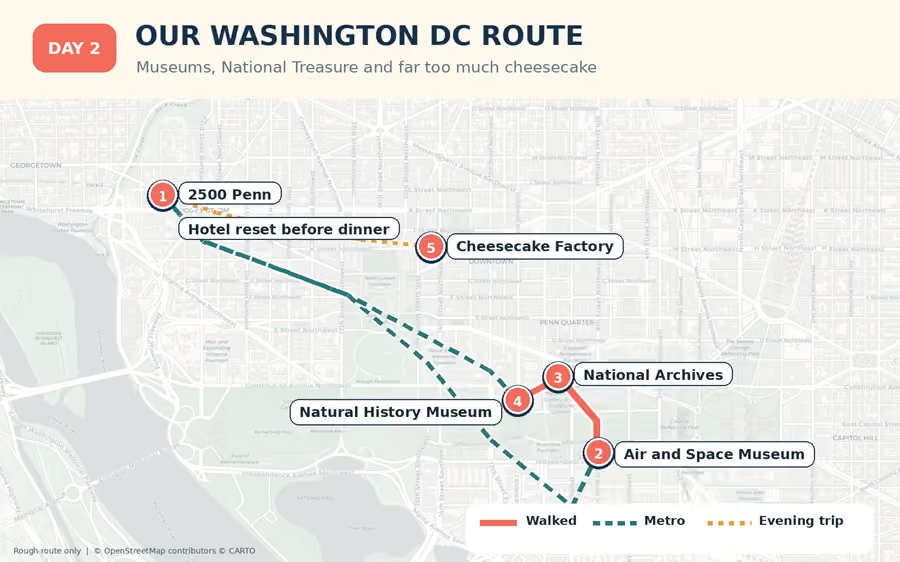
We started day two closer to our normal rhythm, ate breakfast in the room and took the Metro to our first stop by around 9 am.
And three museums in one day sounds perfectly reasonable until you attempt to absorb three museums’ worth of information.
The National Air and Space Museum was a great pick from Cazzy.
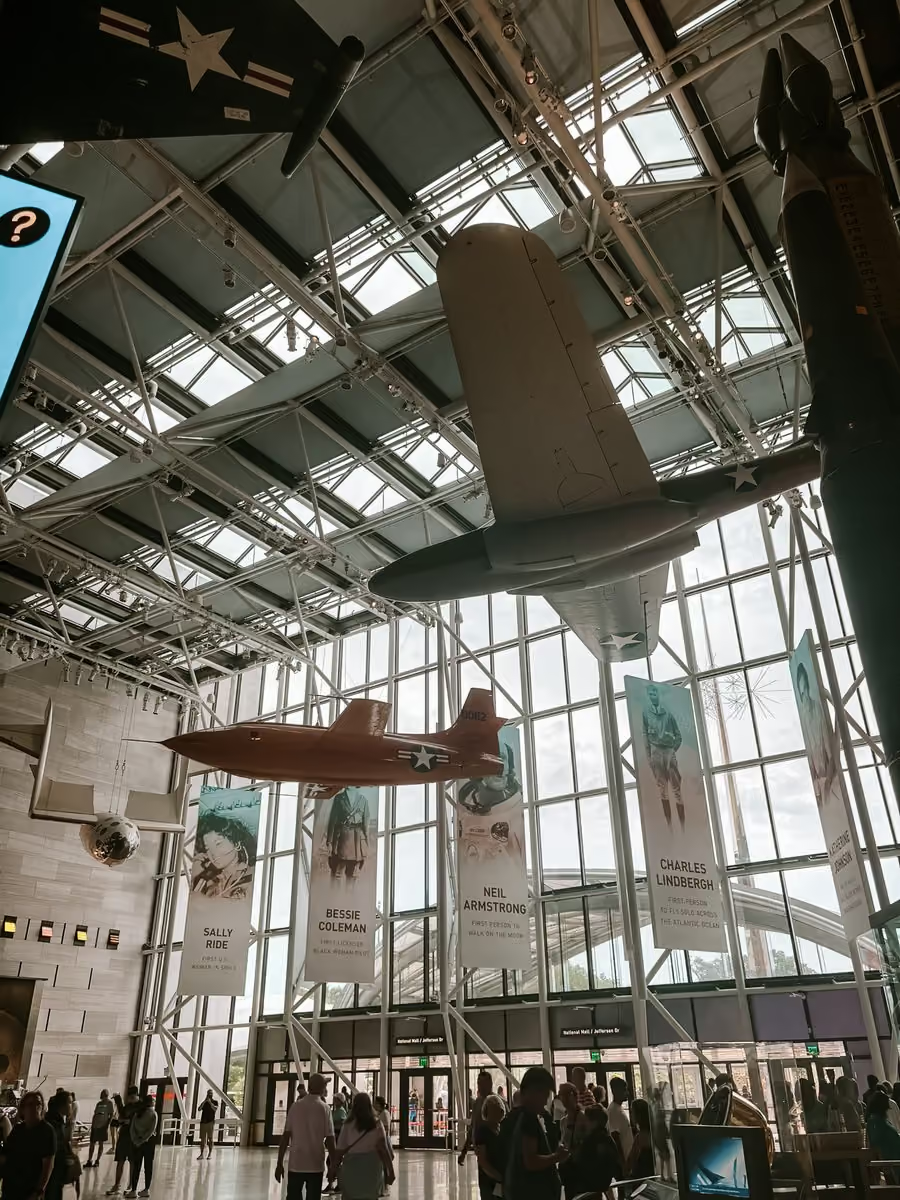
Washington has an extraordinary number of free museums, so pick based on what you genuinely enjoy rather than trying to collect them all.
If you are interested in anything connected to aviation or space, this is an obvious choice.
More than a dozen galleries cover the Wright brothers through to modern space travel, with real aircraft, rockets and landers.
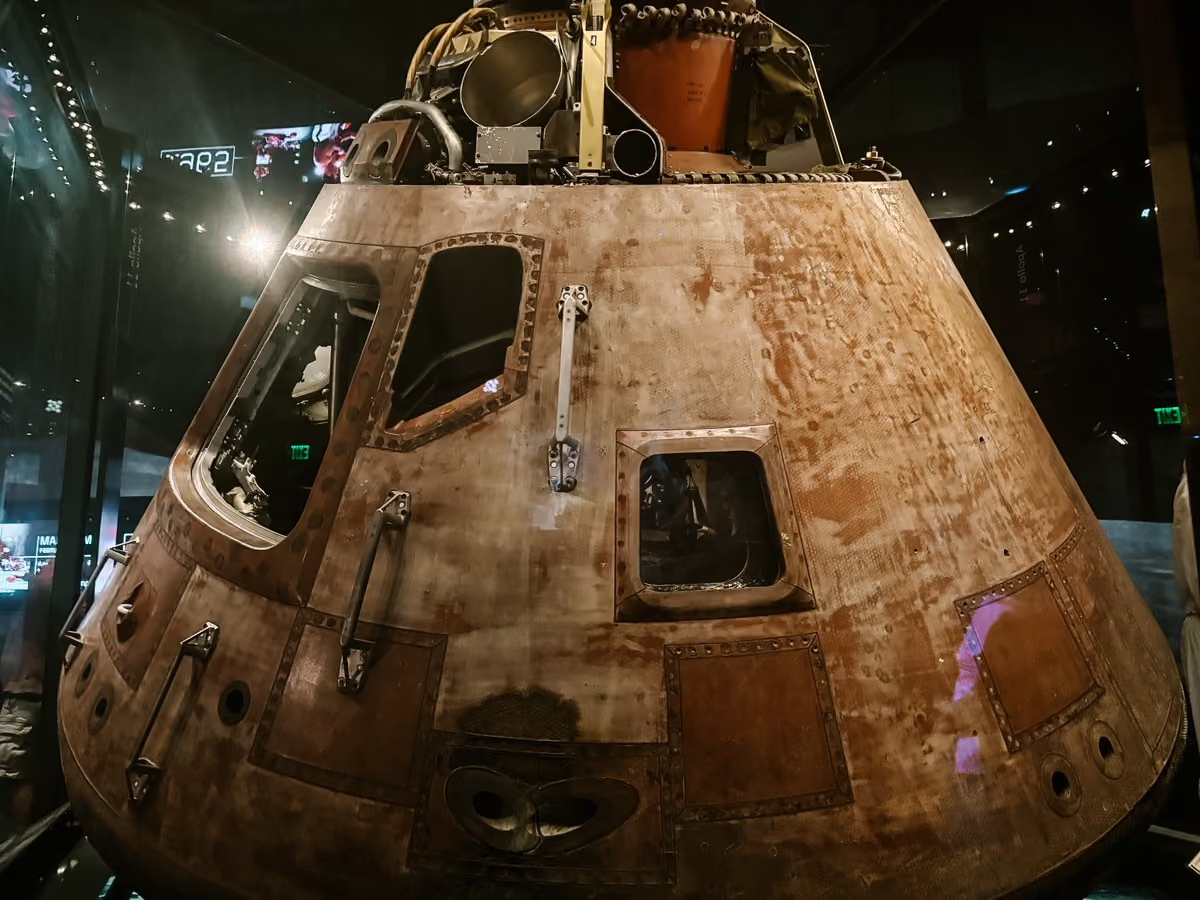
You could spend four or five hours here. For us, two hours was enough, and I already felt mentally drained by midday.
Jeff Bezos actually funded part of the museum, donating $200 million to the Smithsonian, including money for a new Bezos Learning Center.
You currently need a free timed-entry pass for the National Air and Space Museum, so reserve yours on the official museum website before your trip.
General entry is free and exploring independently worked well for us. But if aviation is the main reason you are visiting Washington, this small-group Air and Space Museum tour with reserved entry adds a guide and helps you find the most important exhibits in a couple of hours.
The National Archives was a last-minute addition. During day one, I remembered National Treasure (yano, the movie with Nicholas Cage) and had a thought …
“Wait a second, shouldn’t the Declaration of Independence be somewhere in Washington?”
Yes. Yes it should.
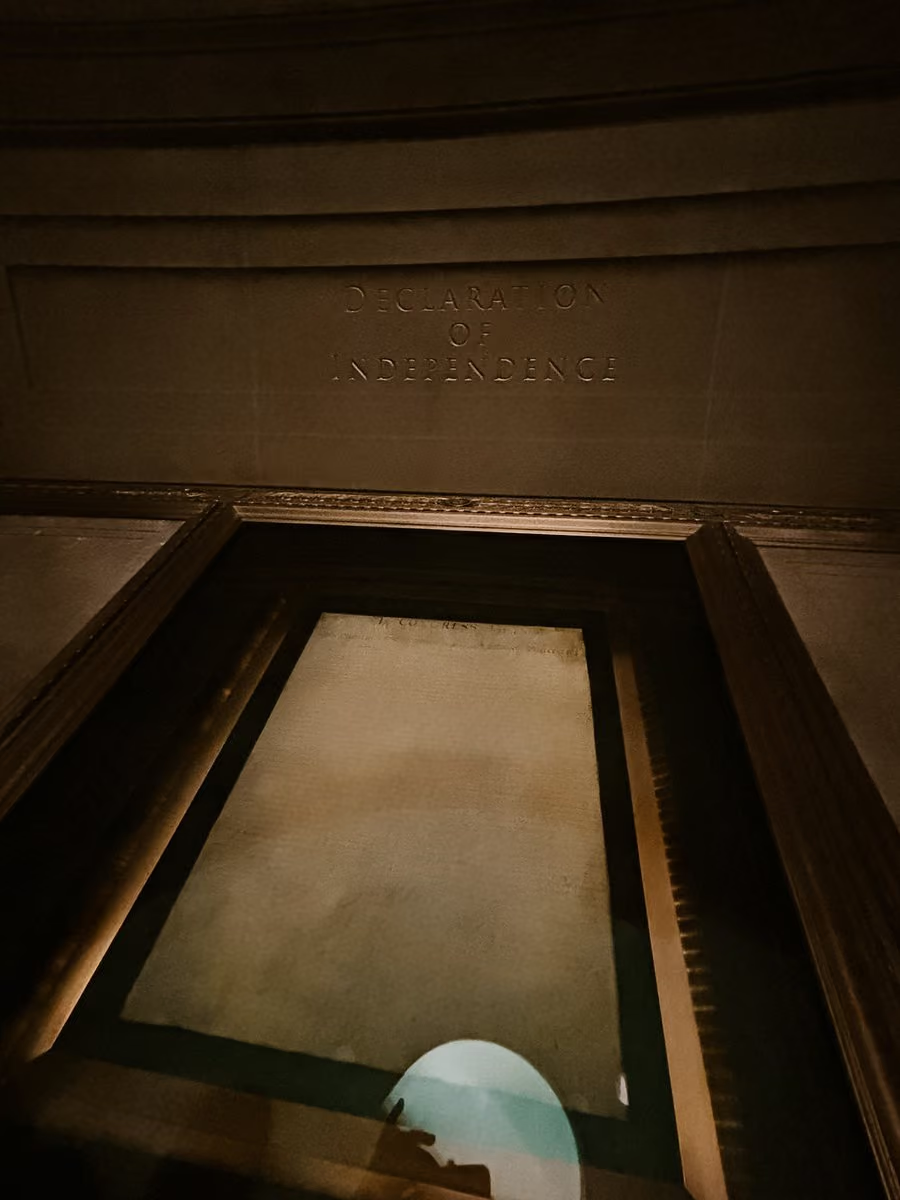
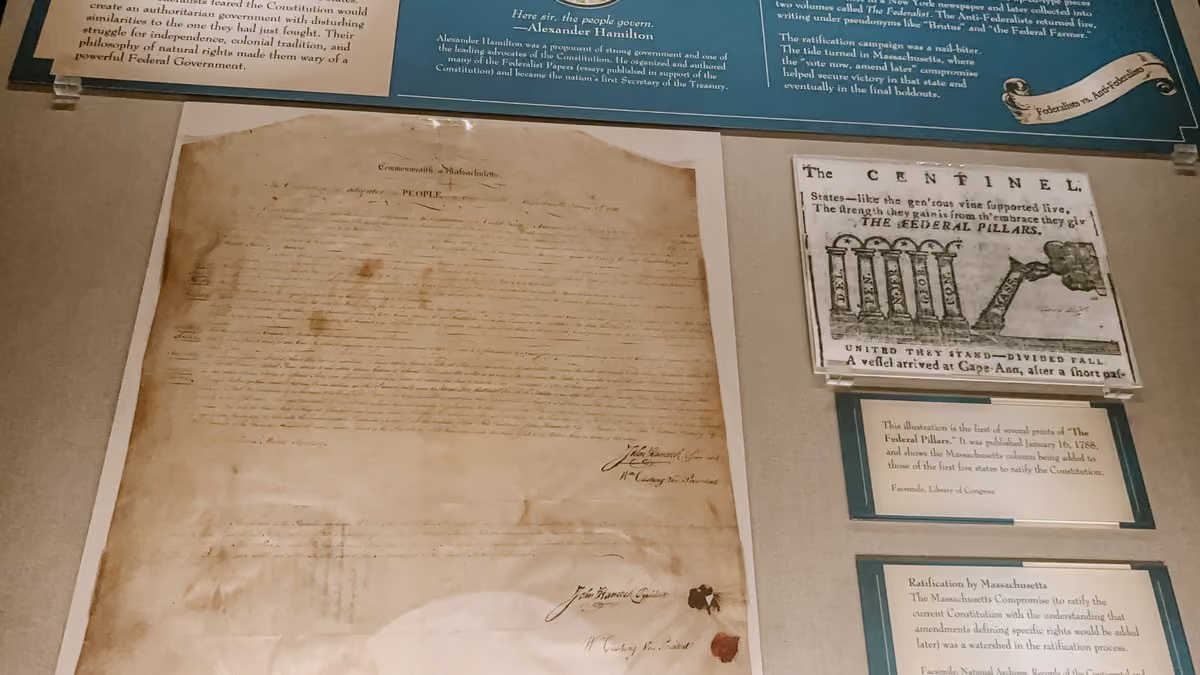
It is inside the National Archives Museum, along with the original US Constitution and Bill of Rights.
This was honestly the sole reason we visited.
I imagine we are not the only ones! I am sure the rest of the museum contains fascinating things, but we did not really find them.
Harsh, but true.
However, walking into the Rotunda and seeing the Declaration of Independence in person felt genuinely surreal.
We are not even American, but it still felt important to stand beside it.
In a way, it reminded me of seeing Magna Carta.
Not because the two documents are the same, but because both represent important moments in the long, messy process of setting out rights and limiting power.
That alone made the visit worthwhile.
We had not known exactly what time we would finish at the Air and Space Museum, so we booked our National Archives tickets online as we left.
It worked perfectly for us.
The National Archives is free and you can normally walk up, reserve free general admission or pay a small booking fee for timed entry. A timed ticket is worth considering in busy periods, but booking on the day gave us the flexibility we needed.
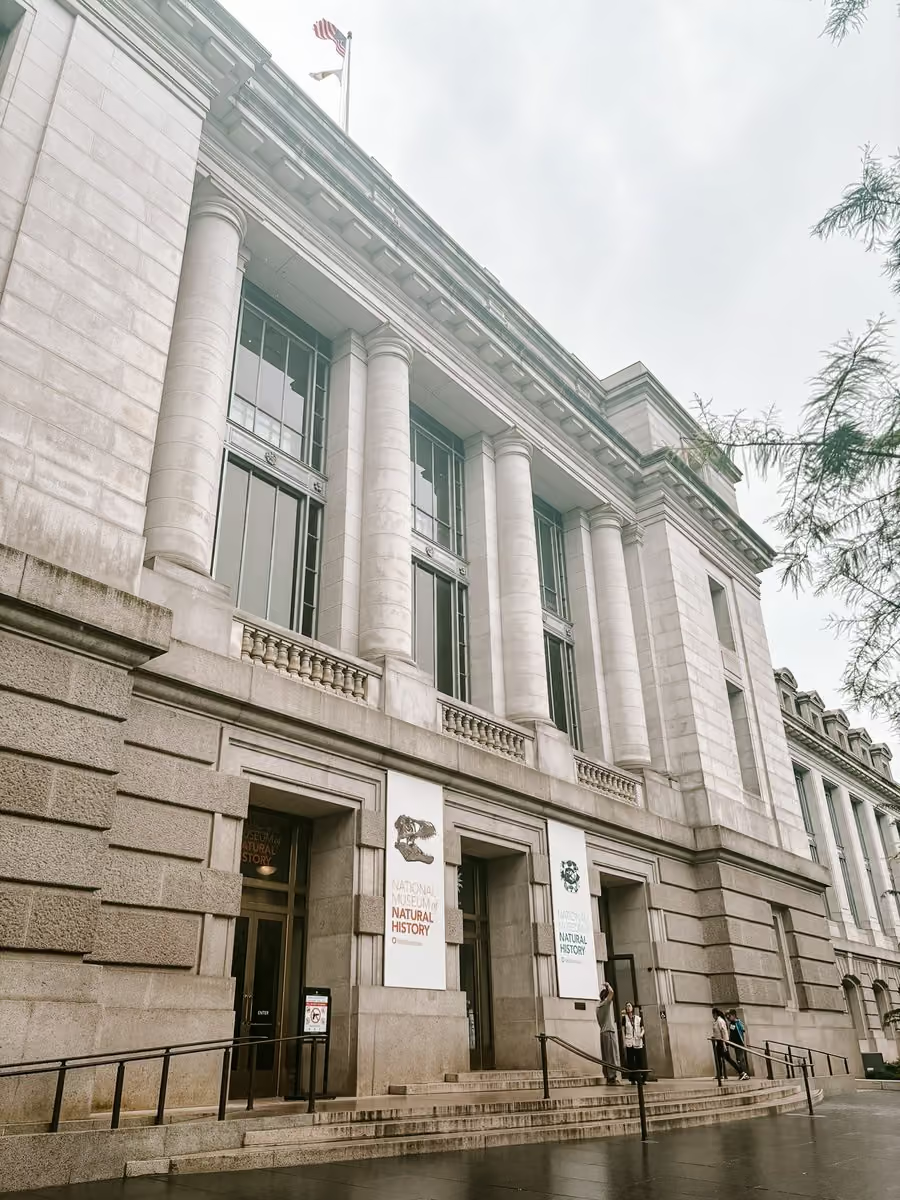
By the afternoon, we were drained but still had our third museum: Natural History. This was a very Cazzy-heavy day. She LOVES planes, spaceships and dinosaurs.
Unfortunately, without going into too much detail, we found the Natural History Museum a bit of a let-down.
This is probably because we have been to a few others, including the Natural History Museum in London, which we thought was literally four or five times as good.
The Washington museum seemed to have relatively little real fossil and dinosaur material on display, which was mainly what we wanted.
It was still interesting and completely free, so complaining feels slightly rude!
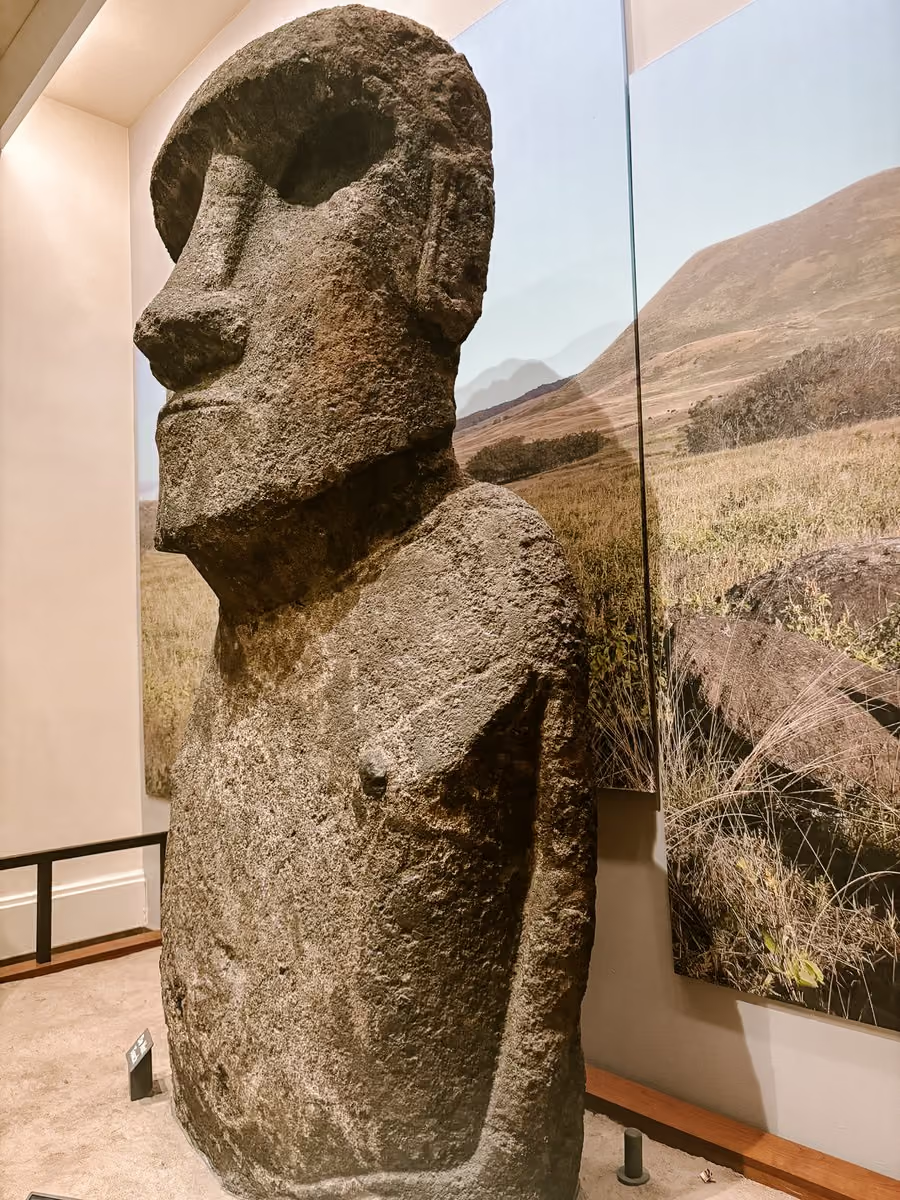
If you have not been to a large natural history museum before, you may absolutely love it.
But for us, it was the weakest of the three museums we visited.
Unlike Air and Space, the National Museum of Natural History currently needs no timed reservation. You can simply arrive and pass through security.
Then we stumbled across something we had no idea was here.
Inside the museum is an incredibly impressive collection of rare gemstones.
All kinds of colours, shapes and stones I had barely heard of before.
At the end of it, we reached the Hope Diamond, one of the most famous diamonds in the world.
We had no idea it was there or how significant it was.
I just had a vague memory of hearing the name somewhere before.
Now, here comes a strange segue.
At this exact point, I was two days away from proposing to Cazzy aboard our Queen Mary 2 cruise from New York.
I had bought her an emerald ring.
Until walking through this gemstone exhibition, I had not fully appreciated quite how many other stones and jewels there were.
Suddenly, I became genuinely terrified that Cazzy was going to start pointing at them and listing all the ones she loved even more than emeralds.
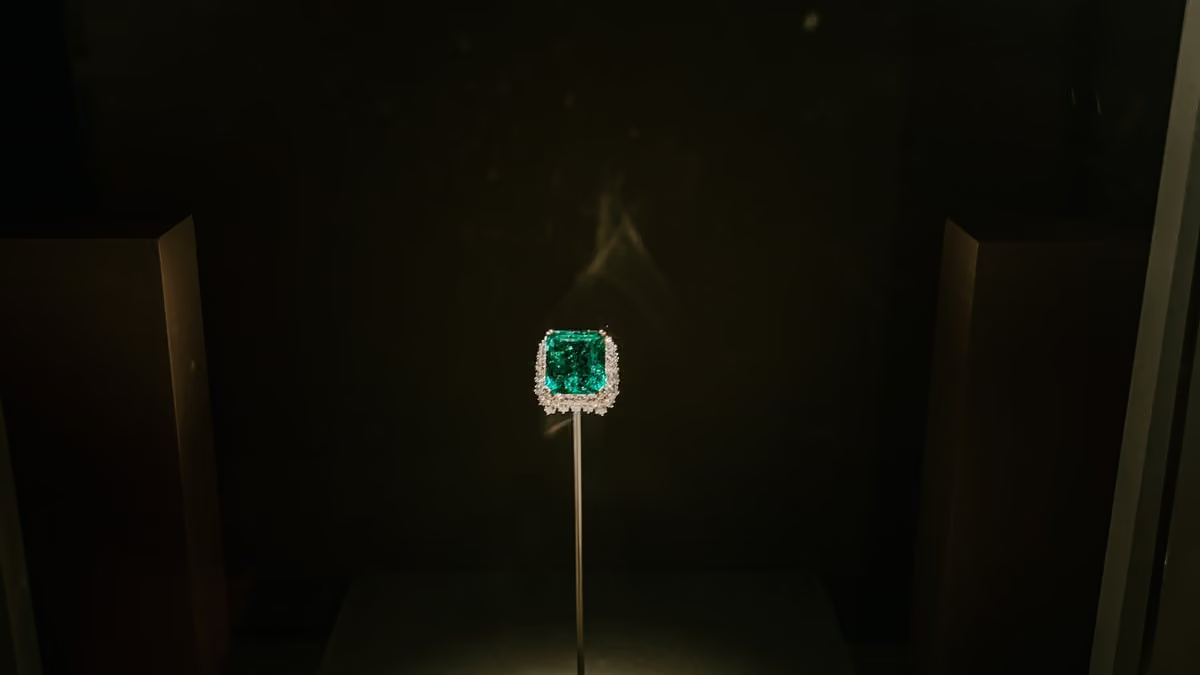
Leaving a tiny bit of disappointment when I pulled out the ring two days later.
Thankfully, that did not happen.
Fast-forward a couple of days and she was chuffed with her ring.
She also said yes … Phew.
Back to the itinerary!
After a busy day, the fun did not end there.
We took the Metro back to the hotel, got ready and headed out for somewhere we were sadly desperate to visit.
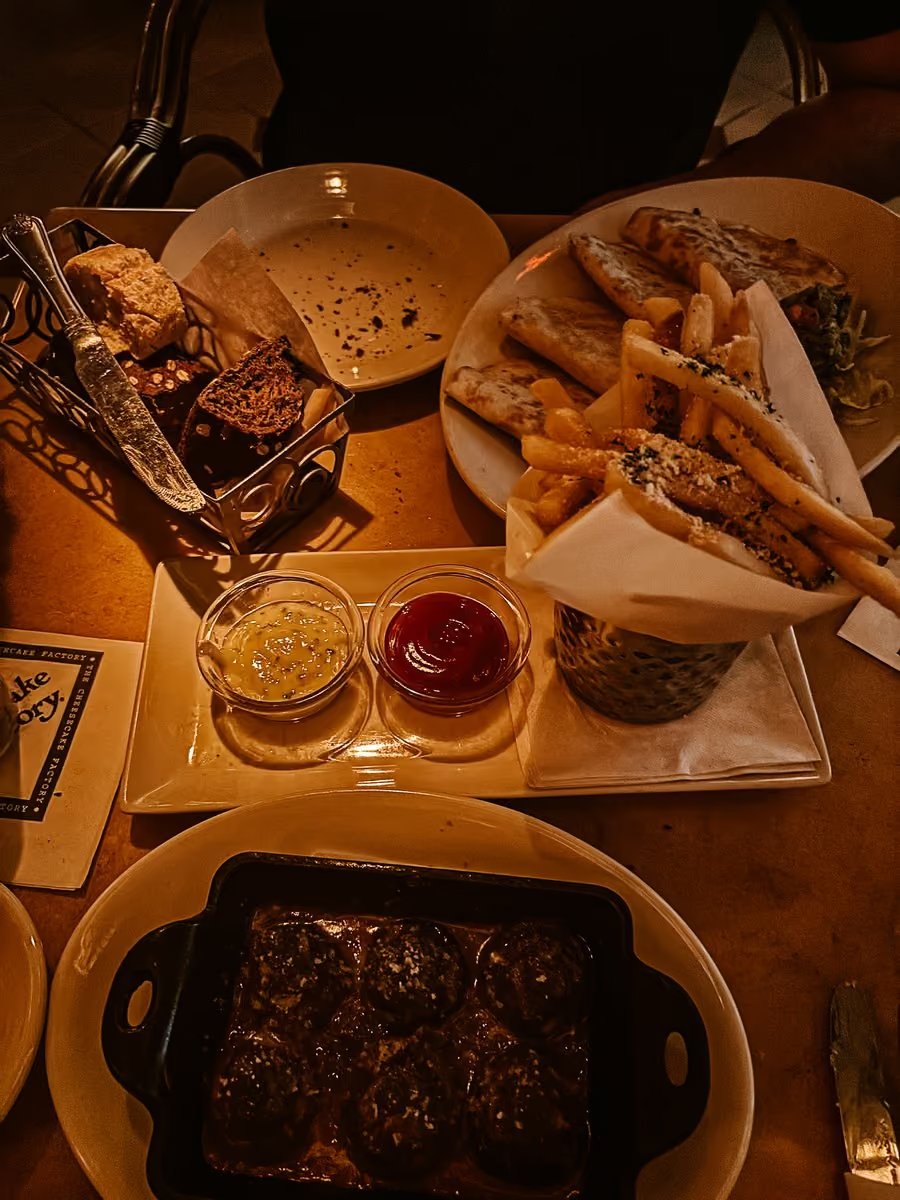
Judge us all you want.
We had spent a month in Florida the year before and somehow never made it to one.
So we were genuinely excited.
I had also been there a few times as a kid and remembered it as a bit of an American institution.
We ordered big cocktails, a huge meal and a massive piece of cheesecake.
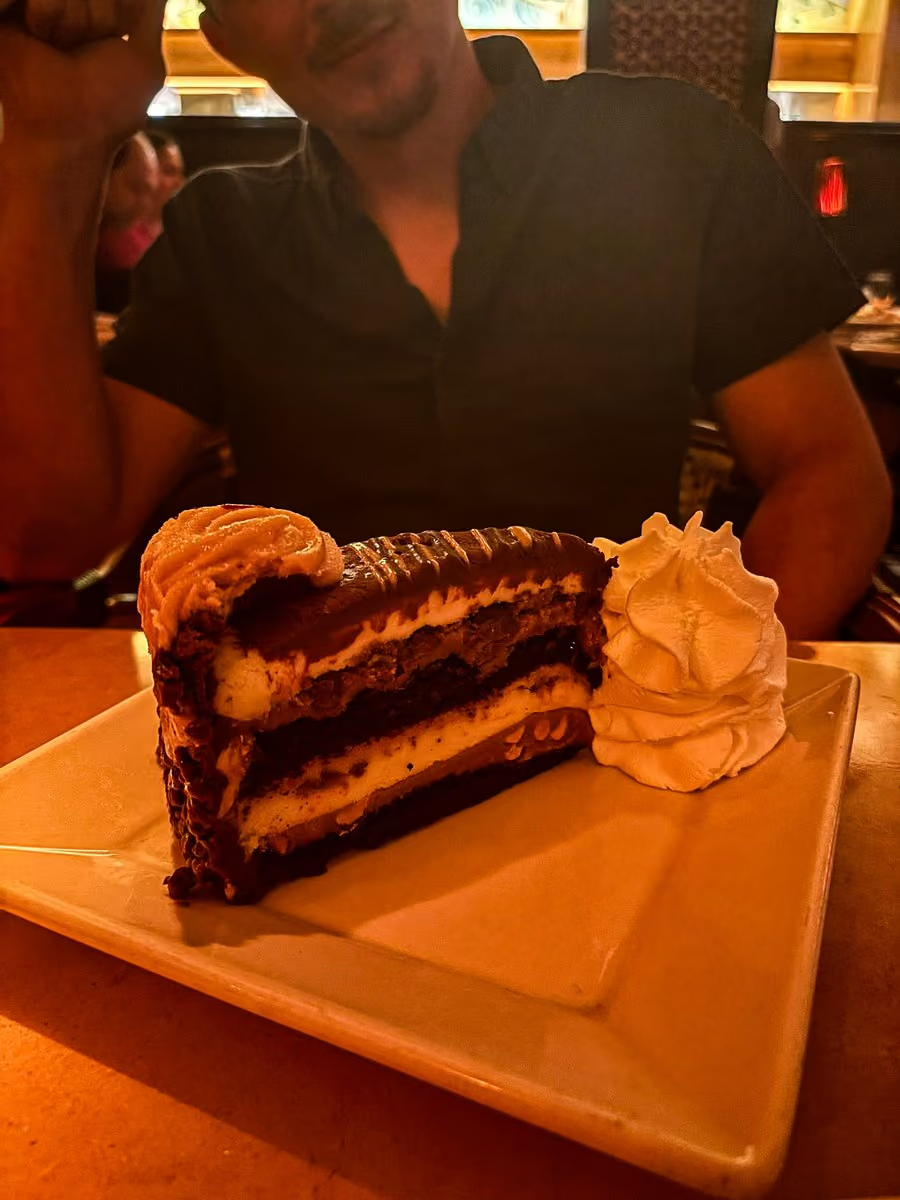
Exactly what we needed.
The cheesecake then followed us around for the next two days and we STILL never finished it.
If you have never been to the United States before and fancy trying a proper over-the-top American chain restaurant, I would consider giving it a go.
It is not sophisticated.
But it is fun.
Mentally?
Yes.
Geographically, the day worked extremely well because all three museums are around the National Mall.
But there is only so much history, science and information you can absorb in a single day before it all starts blending together.
If we visited again, I would choose two museums and spend longer inside the one we liked most.
For us, the Air and Space Museum and National Archives were the right two.
Your choices may be completely different.
That is the beauty of Washington.
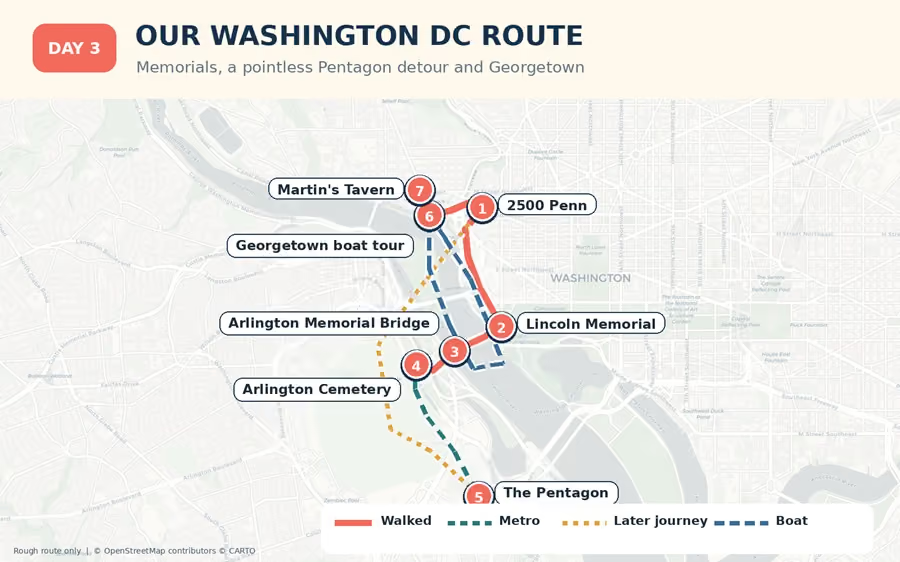
This was a HOT day!
I am not complaining because I would still take it over the little bursts of rain we had.
But it was intense and humid.
Despite that, we were determined to stick with our plan of walking as much as possible.
So we started by following the river from our hotel towards one of the sights I had been most excited to see.
The riverside route was lovely, and as we approached the Lincoln Memorial I realised how many films had been shot around it: Planet of the Apes, The Firm and Forrest Gump (plus I’m sure many more).
The entire area feels like one giant film set.
Unfortunately, like much of Washington during our visit, there was construction taking place.
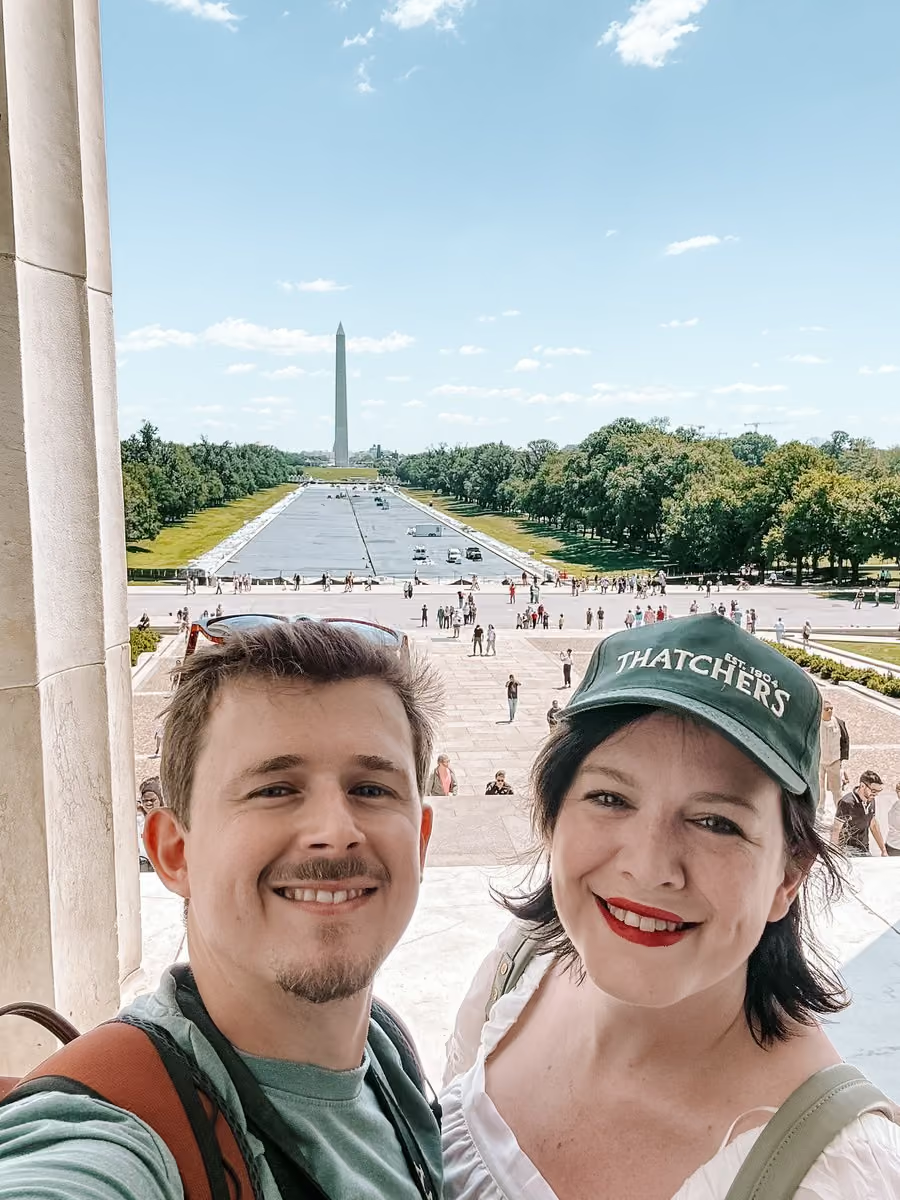
The Lincoln Memorial Reflecting Pool (that Jenny runs through to get to Forest after his speech) had been drained.
We still had a beautiful day, and it did not stop me filming a scene where I pretended to be Forrest Gump watching Jenny run towards him. Across the empty pool, admittedly. Close enough.
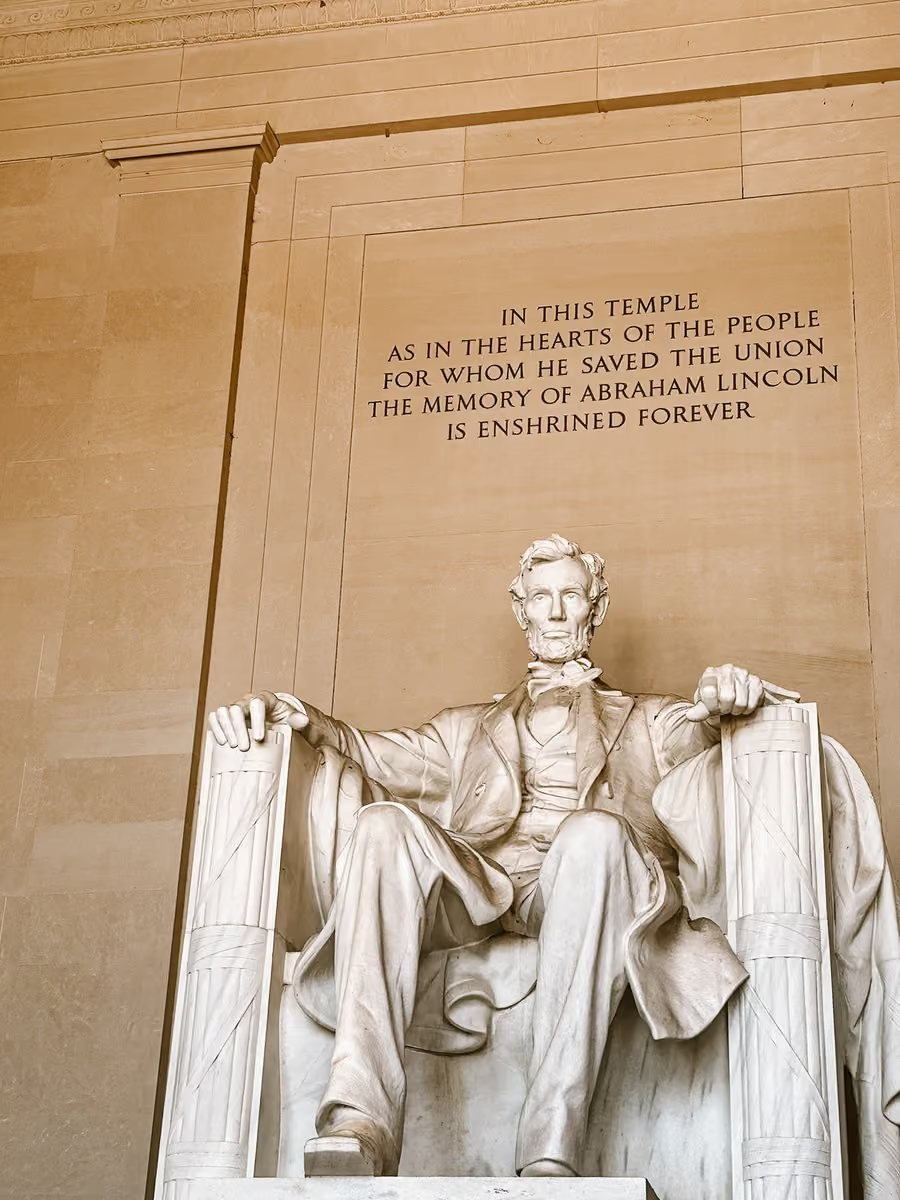
I was surprised by just how awestruck I felt inside the Lincoln Memorial.
The seated Lincoln is enormous, with the Gettysburg Address and Second Inaugural Address carved into the walls. The whole thing feels powerful.
It also continued a theme that had been forming in my mind since the Capitol tour.
My initial thought was that America had built a sort of “fake history” in Washington.
That sounds more insulting than intended. The history is not fake. I mean Washington feels like a country consciously constructing a grand physical version of its own story.
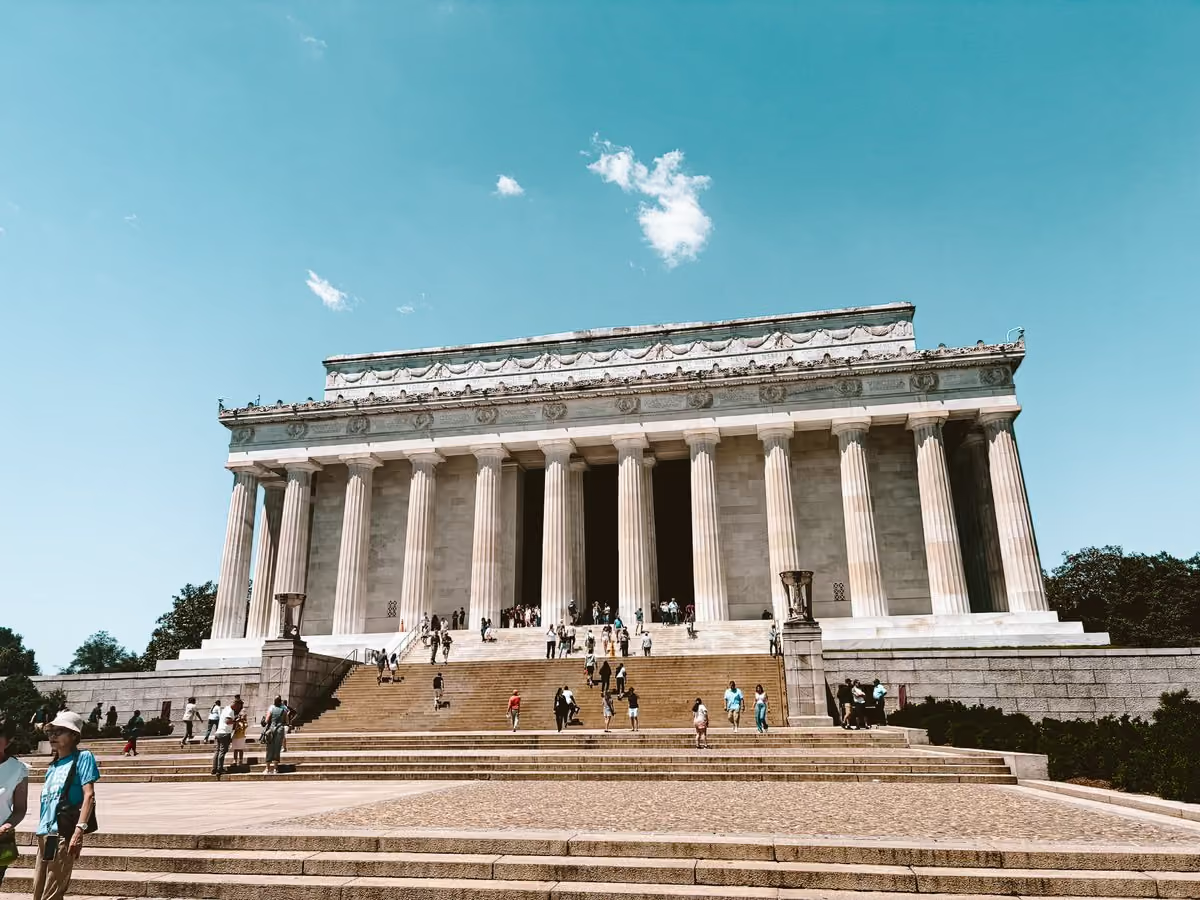
They combined the architecture and symbolism of ancient civilisations such as the Greeks and Romans, then put an American spin on it.
The result gives visitors from every state a shared history and a feeling of something old, important and powerful, even though the country was relatively young when many structures were created.
Standing inside the Lincoln Memorial, I got it.
Washington sometimes feels less like a city that gradually accumulated history and more like a country deliberately building the physical version of its national story.
And it works.
Even on a British tourist who mainly arrived because he recognised everything from films.
From the Lincoln Memorial, we walked across the river via Arlington Memorial Bridge.
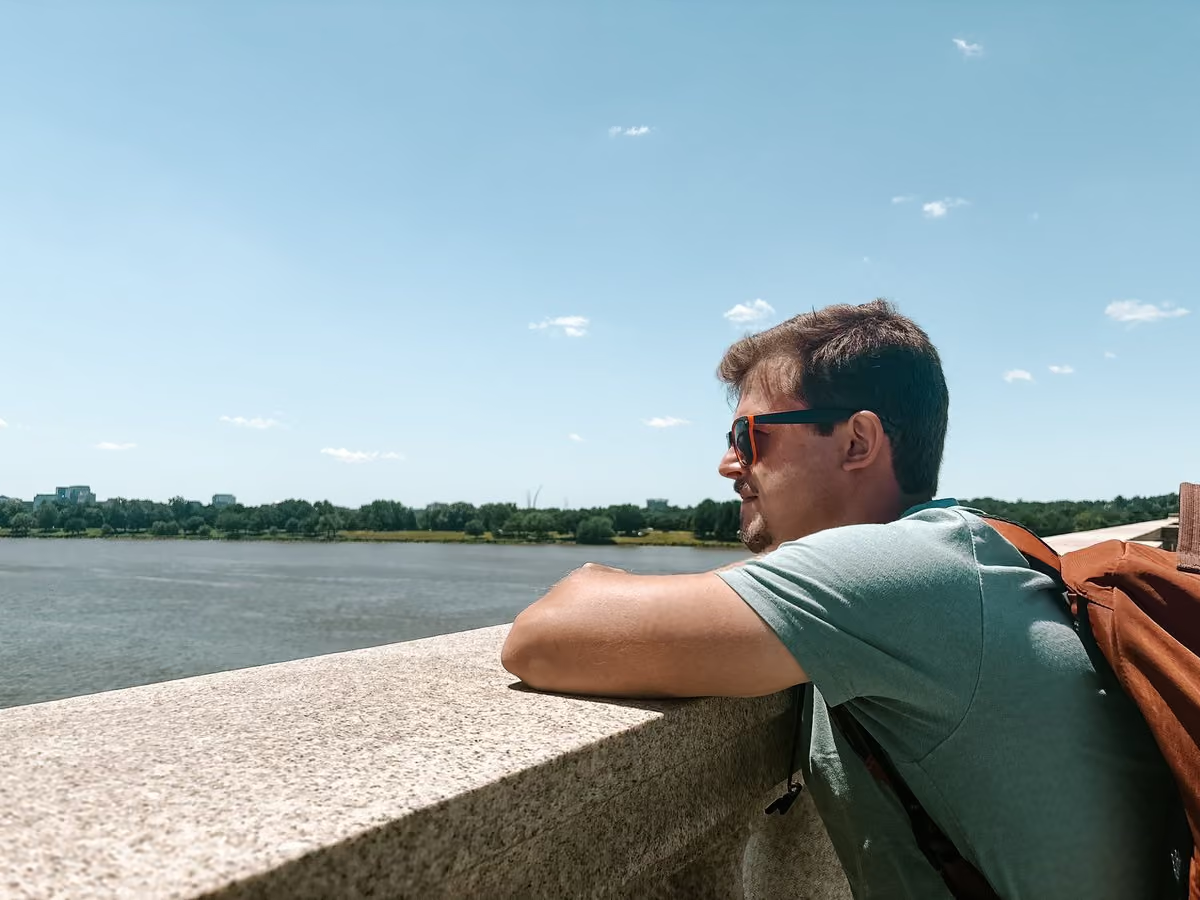
The bridge is almost an attraction in its own right, with beautiful Potomac views and boards describing processions that crossed towards Arlington.
It is a really fitting approach.
You gradually leave the grand monuments of central Washington behind and move towards somewhere much quieter and more reflective.
At least, that is what you are supposed to do.
We did not have time to enter Arlington National Cemetery, which was a real shame. We should have gone, but we were wrecked.
You can fit it into this itinerary, but the heat, jet lag and walking defeated us.
It was gutting because I could already see the place in my mind from Saving Private Ryan.
Though it turns out the opening and closing scenes were actually filmed at an American cemetery in France, so there is another film memory I had confidently mixed up!
I will return to Washington one day, and I will visit the cemetery.
If you want to improve our itinerary, go inside Arlington and give it at least a couple of hours.
The cemetery covers 639 acres and includes the Tomb of the Unknown Soldier and John F. Kennedy’s gravesite, so this is not somewhere you can properly “pop into” for 20 minutes.
Because of that size, the Arlington Cemetery hop-on hop-off trolley tour is genuinely useful rather than just a sightseeing extra. It stops at the JFK gravesite, Tomb of the Unknown Soldier and Arlington House, while saving a serious amount of walking. In the heat we experienced, I would absolutely book it.
Eventually, we reached Arlington Cemetery Metro station and rode around to the Pentagon.
I hoped to see something impressive. The scale is interesting, but there is not much for a casual visitor to see.
The area feels serious and controlled, and you do not feel like wandering around taking photographs.
There is also a 9/11 Pentagon Memorial, which is an important place in its own right.
We could not understand why we had traipsed over for an exterior view. You will probably pass it in a taxi or on an airport journey, so look from the car.
I would not include the Pentagon as a sightseeing stop unless you have arranged a proper tour or specifically want to visit the memorial.
From here, we walked to a shopping centre because we needed a few supplies we had forgotten for our upcoming cruise.
Another highly glamorous addition to our Washington itinerary.
If I planned the day again, I would skip the Pentagon, spend those hours properly exploring Arlington and then take the Metro towards Georgetown.
We cut sightseeing short for a Georgetown boat trip around 5 pm. We did not want to rush.
Georgetown was one reason we chose 2500 Penn, which was within easy walking distance.
Or “old-school town”, as I described it in my notes. Which is genuinely what it feels like.
It feels less busy, commercial and official.
There are colourful old houses, traditional architecture and streets filled with restaurants, bars and shops.
Our first stop was a sightseeing cruise with Capitol River Cruises.
This was a really lovely thing to do.
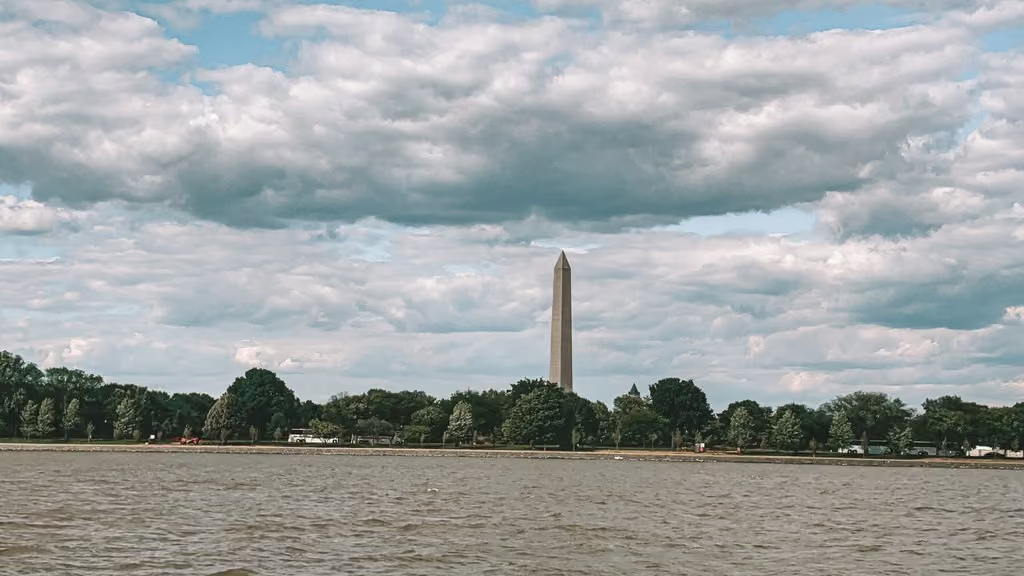
You travel along a good stretch of the Potomac River, getting a completely different view of Washington and several of its major landmarks.
There is commentary over the tannoy, although it was extremely hard to hear from much of the boat. We caught some important bits. I think.
Regardless, the views were great and it was a relaxing way to finish what had been a very hot and tiring day.
Our exact sailing may not suit every date, but this narrated Washington monuments cruise on the Potomac offers a very similar chance to see the city from the water. Book an evening departure if you can, because it gives your legs a break after the memorials and brings you into Georgetown at a lovely time of day.
Once the boat returned, we walked along the river and then up into Georgetown proper.
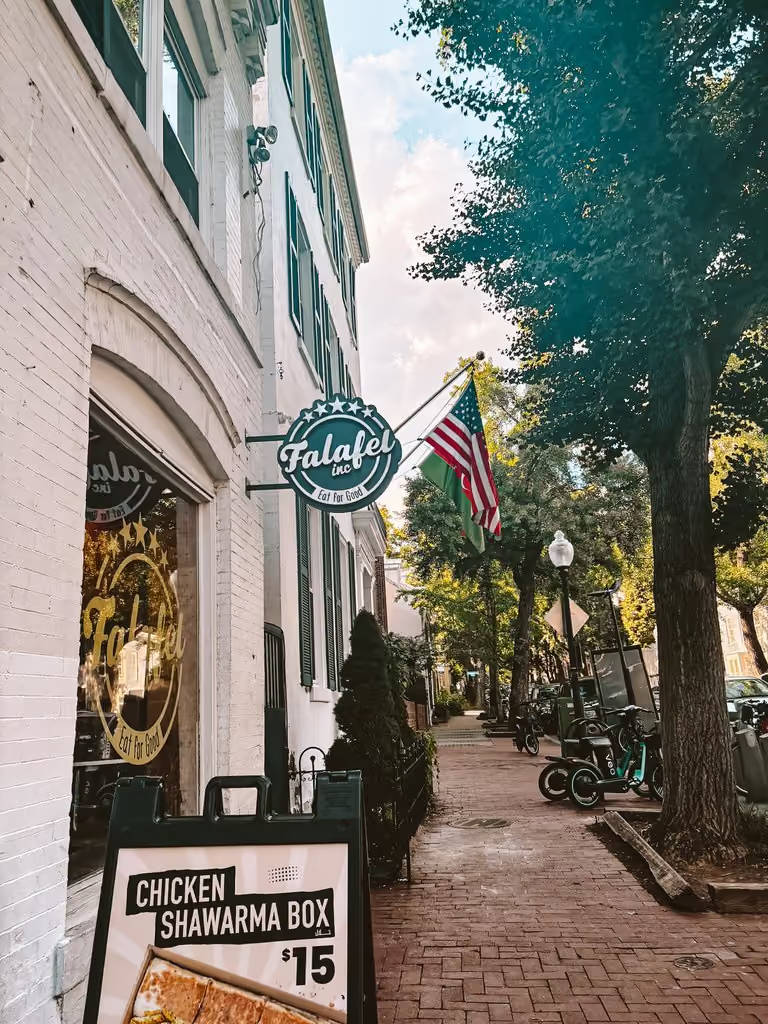
You could easily spend days exploring, shopping and eating here. It lacks the famous monuments but feels much more like somewhere people actually live.
After three days of huge government buildings, security checks, memorials and museums, that change of pace was very welcome.
If food is more important to you than squeezing in another museum, this Georgetown food and history walking tour would fit nicely into the second half of day three. It combines several tastings with the neighbourhood’s history, so it is a more structured way to explore than our slightly aimless wandering.
We decided to find somewhere with a bit of history.
And we ended up at Martin’s Tavern.
Martin’s Tavern has been in Georgetown since 1933.
And the place has seen a LOT.
John F. Kennedy lived nearby and regularly visited the tavern.
Staff and customers reportedly saw him working on the first draft of his inaugural address there.
Then, on 24th June 1953, he proposed to Jacqueline Bouvier in Booth 3. It is now known as the Proposal Booth.
There are other booths linked to presidents, politicians and major moments in American history.
You can eat here and, looking back, perhaps we should have done.
But we settled for drinks. Still, it felt like a proper bar.
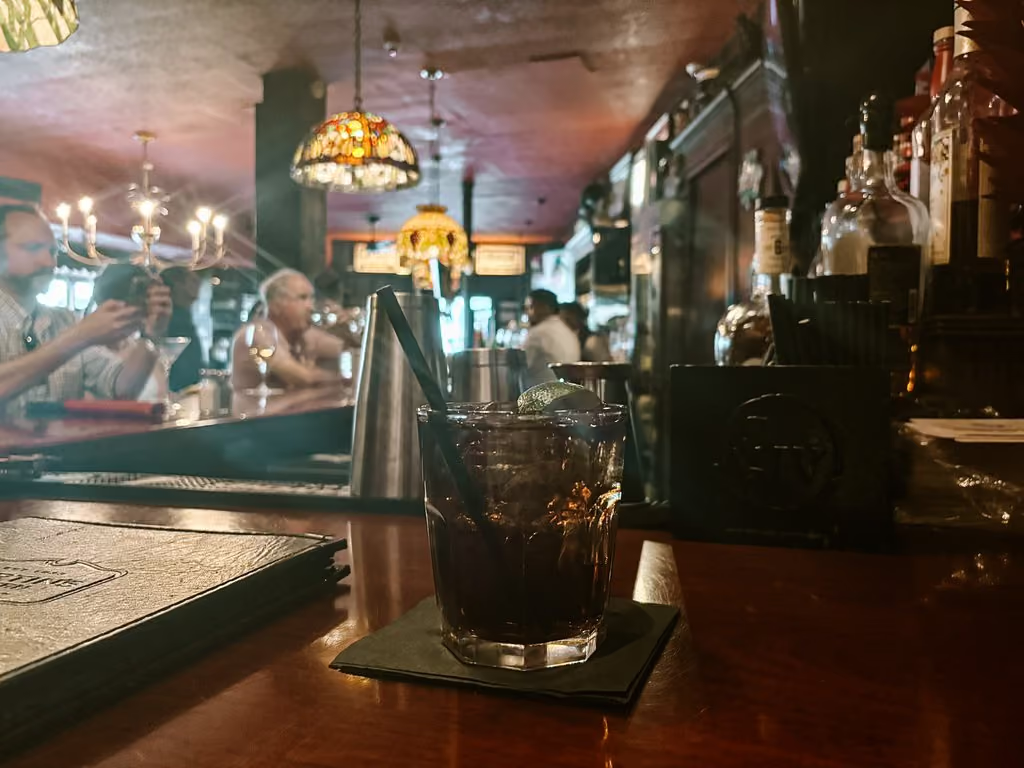
It had a great atmosphere, genuinely lovely staff and enough history that we did not mind dropping decent money on two drinks.
It was also a strangely fitting place to end our time in Washington.
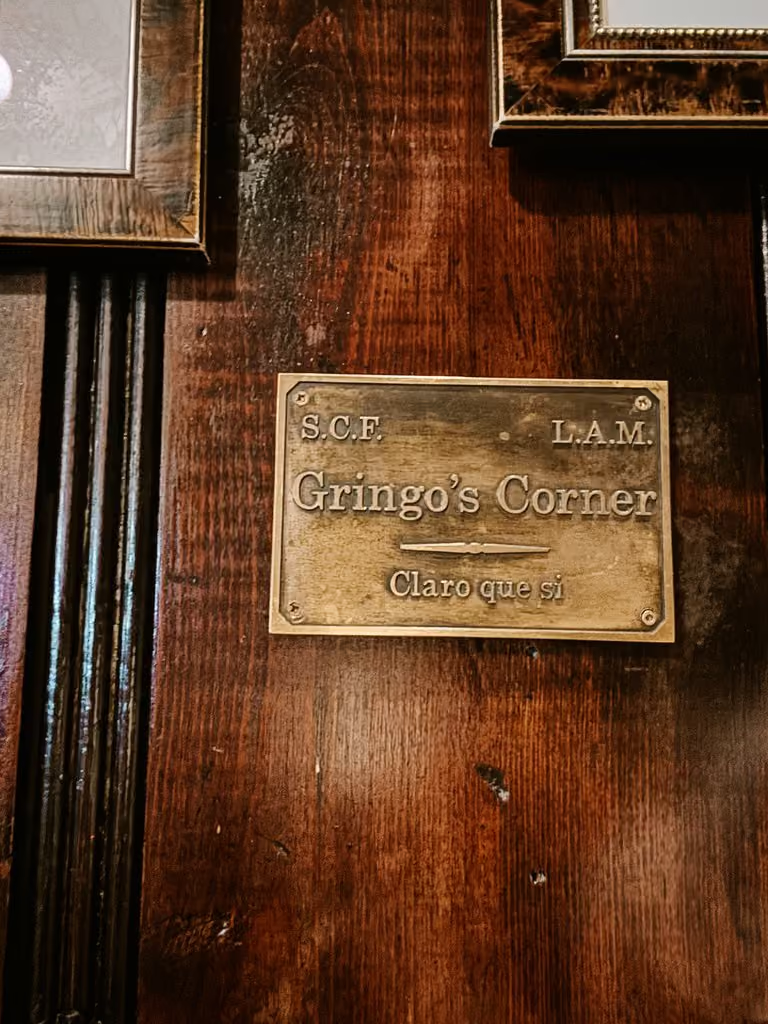
The trip began with enormous monuments and buildings designed to display American history on the grandest possible scale.
It ended in a normal neighbourhood tavern where parts of that history had genuinely happened over breakfast and drinks.
I liked that.
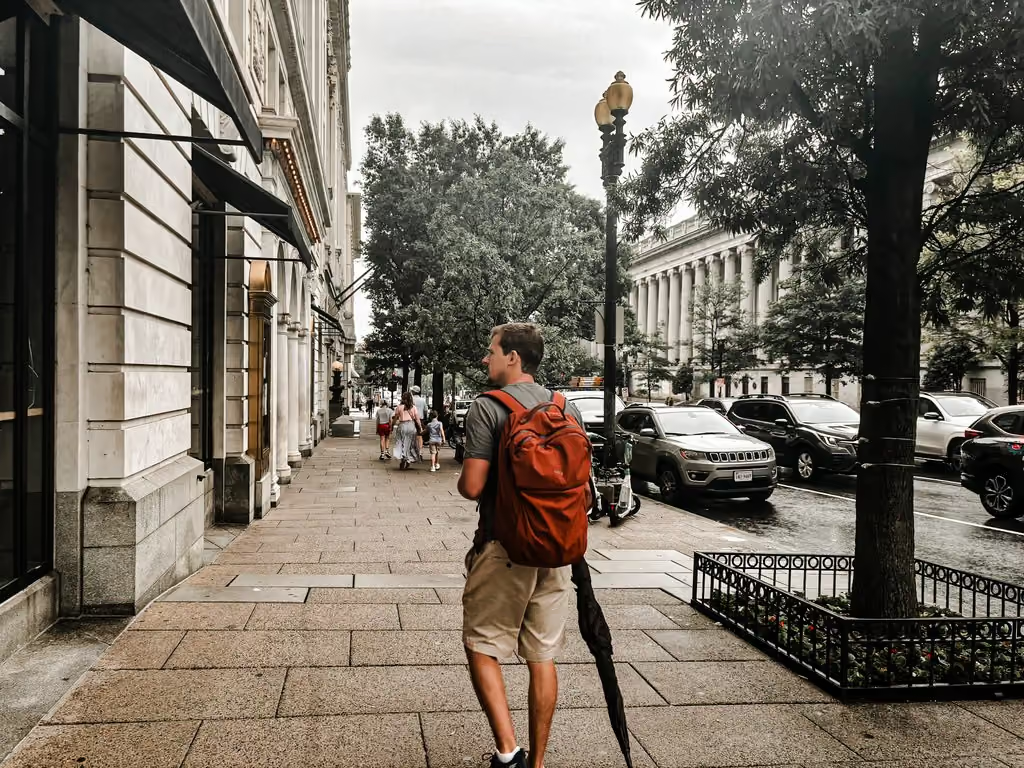
Walking is the best way to experience Washington, but the distances are deceptive. You can see the next building clearly and still spend another 20 minutes walking towards it. Wear comfortable shoes, carry water where security allows and take summer heat seriously.
The Washington Metro is ideal when your legs give up. You can tap in and out with the same contactless card or mobile wallet, although each traveller needs their own. We used it after long sightseeing days and between Arlington and the Pentagon.
We also used Uber and Lyft. At the airport, we waited around 15 minutes and saw prices of roughly $45 to $55 into Washington. A later ride from the Capitol area to Foggy Bottom cost around $18, although these prices can change enormously with traffic and demand.
For planning routes, bookings and transport, our roundup of the best travel apps covers the tools we rely on most.
Washington’s hotels and restaurants can be expensive, but most of the major attractions in this itinerary were free. Our kitchen saved us money on breakfast and lunch, while the Metro kept Uber costs down. Just remember that homemade lunch cannot follow you into every government building.
In short: stay somewhere with a kitchen, reserve the free tickets early, walk when the route itself is interesting and use the Metro when it is not.
Washington DC was more interesting than I expected. The museums were great, mostly, the monuments were impressive and walking between them felt like one giant open-air history lesson.
I mainly wanted to BE in Washington, feel its scale and understand why the city had been designed so deliberately. I got that and more.
We stumbled into places we had not planned to visit, ate in places we found by accident and learned far more about American history than I expected.
Three days gave us a fantastic overview without turning the trip into a military operation.
Would I return? Absolutely.
I want to see Arlington properly, visit the Library of Congress, go up the Washington Monument and finally get an unobstructed White House view.
But for a first visit?
This three-day Washington DC itinerary gave us exactly what we wanted.
Even if it did also take our pizza.
Now over to you …
Is there anything you think I missed?
Or even have some recommendations from your own visit to Washington?
Just drop a comment below, I’d love to hear from you!
Other guides you might like:



Leave a comment
Let us know what you think!